

When Marriage Feels Heavy: What Faith Based Relationship Therapy Can Do for You
Faith based relationship therapy is a form of couples counseling that weaves Christian beliefs, Scripture, and prayer into evidence-based clinical practice — helping couples find healing and wholeness through both professional tools and the power of God’s design for marriage.
Here’s a quick overview of what it is and who it’s for:
| Question | Answer |
|---|---|
| What is it? | Couples therapy grounded in biblical principles and clinical methods (like EFT or Gottman) |
| Who is it for? | Christian couples, pre-married couples, or those open to faith-rooted healing |
| How is it different from secular therapy? | It treats marriage as a sacred covenant, not just a contract, and integrates prayer and Scripture alongside practical tools |
| What does it address? | Communication breakdown, infidelity, spiritual disconnection, intimacy loss, and more |
| Where can you access it? | In-person counselors, online platforms, and intensive marriage retreats |
Marriage is one of the most beautiful — and most demanding — commitments two people can make. Even deeply faithful couples face seasons of distance, conflict, and pain. If that’s where you are right now, you are not alone, and you are not beyond hope.
The truth is, you were created for more than surviving your marriage. You were created to thrive in it.
Faith based relationship therapy meets couples exactly where they are — bringing together the timeless wisdom of Scripture and the best of modern counseling science. It doesn’t ask you to choose between your faith and getting real help. It holds both together.
At NuWell Online, we have seen again and again that couples who bring God into the healing process don’t just resolve conflict — they experience genuine transformation.
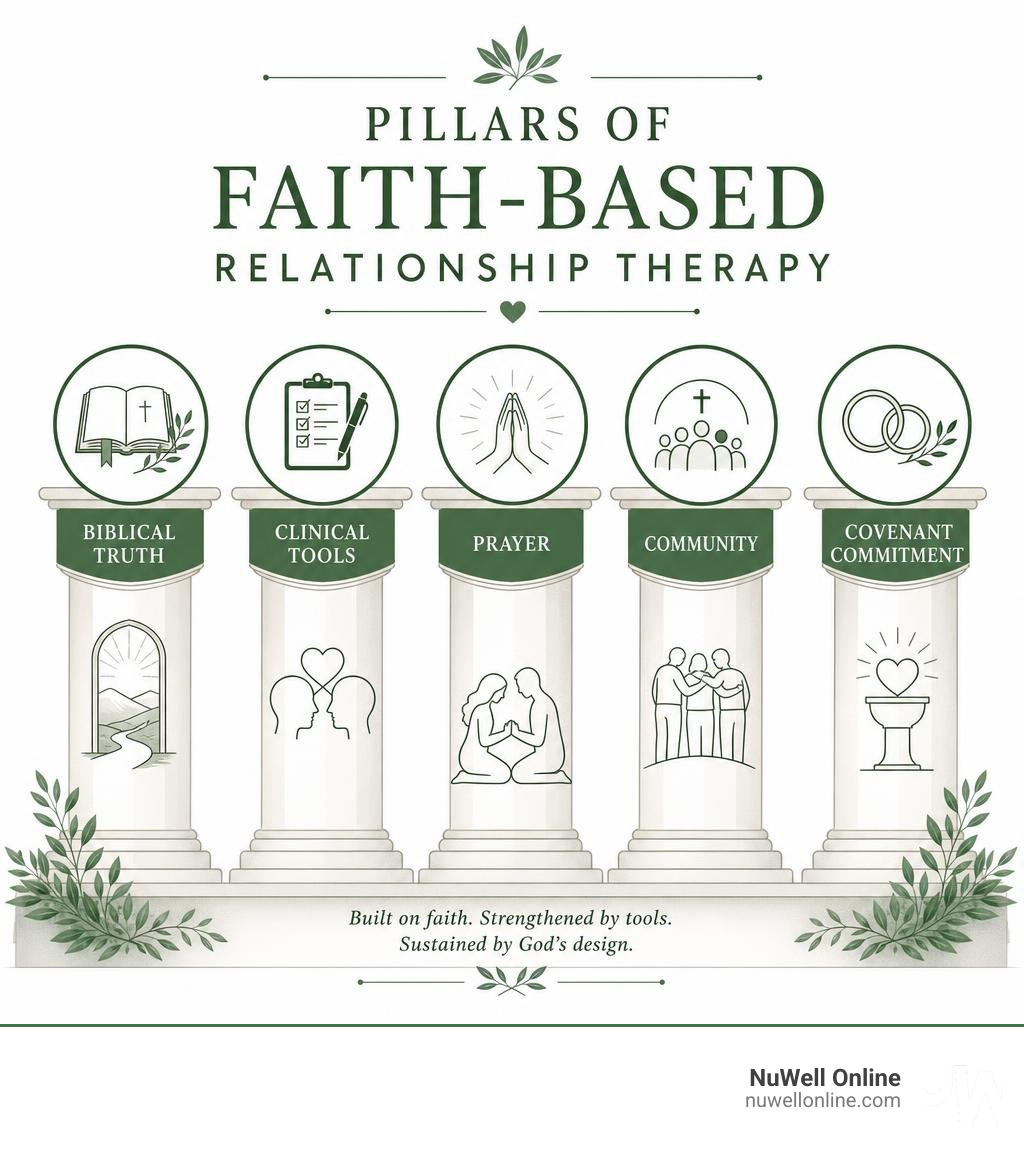
What is Faith Based Relationship Therapy?
At its core, faith based relationship therapy is a specialized form of counseling that treats the marital union as a sacred covenant with God rather than a mere legal contract. While secular counseling focuses primarily on immediate symptom relief, communication techniques, and behavioral adjustments, faith-integrated therapy addresses the spiritual heart of the relationship.
We believe that relationships are God’s primary classroom for teaching us about brokenness, connection, grace, and our ultimate worth. When a couple enters our therapy space, we do not just look at the surface arguments; we seek to understand the spiritual and relational dynamics underneath.
The differences between these two approaches are profound:
| Feature | Secular Couples Counseling | Faith-Based Relationship Therapy |
|---|---|---|
| Foundational View of Marriage | A legal and emotional contract between two consenting adults. | A sacred covenant designed by God, involving husband, wife, and the Creator. |
| Ultimate Authority | Evolving psychological theories and personal happiness. | Unchanging Biblical truths combined with clinically sound science. |
| Primary Goal | Conflict reduction, individual happiness, and mutual satisfaction. | Spiritual growth, holiness, mutual submission, and Christlike reconciliation. |
| Therapeutic Tools | Behavioral modification, communication skills, cognitive restructuring. | Clinical interventions (EFT/Gottman) integrated with prayer, Scripture, and grace. |
| Role of Community | Often viewed as secondary or purely social. | Anchored in the support, accountability, and restoration of the church community. |
By choosing a faith-integrated path, you are choosing to look at your struggles through the lens of redemption. If you want to explore how a covenant-focused approach can transform your home, read our guide on Faith-Based Couples Counseling That Actually Saves Marriages.
Integrating Biblical Truth with Evidence-Based Science
A common misconception is that Christian counseling is simply “a guilt trip with Bible verses.” This could not be further from the truth. True professional excellence does not ignore the physical and neurological realities of how God designed our minds and bodies. The God who wrote Scripture is the very same God who designed our nervous systems. Therefore, true healing must honor both.

At NuWell, we have found that integrating professional excellence with timeless Scripture leads to deep, lasting transformation. We utilize cutting-edge neuroscience, attachment theory, and trauma-informed care alongside biblical counseling. This approach ensures that you receive the highest standard of clinical care while keeping your faith at the center of your healing journey. If you are ready to experience this integrative approach, you can Schedule a Pastoral Counseling Session with our team today.
The Role of EFT in Faith Based Relationship Therapy
Emotionally Focused Therapy (EFT) is widely considered the gold standard of couples therapy, boasting extensive research showing long-term recovery rates. EFT focuses on identifying the negative interaction cycles-often called “demon dialogues”-that keep couples trapped in patterns of pursuit and withdrawal. For readers who want to understand the broader clinical background, the American Psychological Association offers helpful information on psychotherapy and evidence-based care.
For the Christian couple, EFT is a beautiful clinical tool because it aligns perfectly with God’s design for human attachment. God created us for deep, secure connections. When we feel disconnected from our spouse, our nervous system enters a state of panic, leading to defensive posturing, anger, or emotional shutdown.
By utilizing EFT within a faith framework, we help couples identify their “raw spots” and learn to reach for one another in vulnerability. This fosters a secure bond that reflects the secure, unshakeable love Christ has for His Church. If you are wondering how to build a stronger relationship with your partner, understanding these attachment styles is the first step toward restoring safety.
How Scripture and Prayer Enhance Clinical Interventions
While practical tools provide the framework, Scripture and active prayer provide the spiritual power for real heart change. In our sessions, prayer is not used as a quick band-aid to bypass difficult emotions. Instead, it is an active therapeutic tool.
We use Scripture to realign our hearts with God’s truth, moving away from “contractual” thinking (“I will only love you if you perform”) and toward “covenant” thinking (“I will love you sacrificially, as Christ loved the Church”). When we pray together in counseling, we invite the Holy Spirit into the broken spaces, allowing couples to offer and receive the kind of unearned grace and forgiveness modeled at the Cross.
For a deeper look at how pastoral care integrates these elements, check out our article on Nurturing Marital Bliss: Discover the Power of Pastoral Counseling at Nuwell.
Common Challenges Addressed in Christian Couples Counseling
Even the most dedicated Christian couples face seasons of intense struggle. When life gets overwhelming, communication breaks down, and couples often find themselves having the exact same argument over and over again without any resolution.

Some of the most common issues couples bring to faith-based therapy include:
- Communication Breakdowns: Falling into toxic cycles of criticism, defensiveness, and stonewalling.
- Infidelity and Betrayal Recovery: Rebuilding trust from the ground up after a breach of the marriage covenant.
- Financial Stewardship Disagreements: Aligning financial goals, spending habits, and giving patterns with biblical stewardship.
- Parenting Conflicts: Navigating differing discipline styles and family values while trying to raise children in faith.
- Intimacy and Sexual Struggles: Overcoming shame, past hurts, or physical disconnection to enjoy the gift of marital intimacy.
When these challenges arise, we must remember that conflict itself is not the enemy. Rather, it is an opportunity to deepen intimacy and refine our character. To start resolving these cycles, explore our practical steps for Marriage Conflict Resolution.
Navigating Spiritual Disconnection and Mismatch
One of the most painful experiences in a Christian marriage is spiritual disconnection. This can happen when one partner experiences a season of doubt, when there are differing levels of theological understanding, or when a couple is “unequally yoked” in their daily walk with God.
Faith-based therapy provides a grace-filled space to discuss these spiritual gaps without judgment. We help couples find common ground, learning how to respect each other’s individual spiritual journeys while continuing to build a shared life of values and purpose. If you are preparing for marriage or seeking to align your spiritual foundations early on, you can read about How to Find Faith-Based Premarital Coaching and Marriage Help Online.
Restoring Intimacy and Trust in Marriage
True restoration after betrayal or years of emotional neglect requires more than just behavior modification; it requires heart-level reconciliation. Faith-based relationship therapy draws directly from the ultimate model of reconciliation: the Cross.
We guide couples through the painful but necessary steps of true repentance, forgiveness, and the gradual rebuilding of trust. This spiritual work directly paves the way for physical and emotional intimacy to flourish once again, freeing couples from the weight of resentment. For couples seeking to reclaim the joy of physical connection within God’s boundaries, we discuss this openly in our resource on Sex and Christian Marriage.
Choosing the Right Path: Weekly Sessions vs. Marriage Intensives
When couples reach a crisis point, they often wonder what format of care will best serve their relationship. The two primary paths are traditional weekly counseling sessions and multi-day marriage intensives (often referred to as marriage retreats or boot camps).
To help you decide which path is right for your relationship, consider this breakdown:
- Weekly Counseling Sessions:
- How it works: 50-to-90-minute sessions once a week or bi-weekly.
- Pros: Allows couples to process issues in real-time as they occur in daily life; provides steady, long-term accountability; easier to fit into a busy schedule.
- Cons: It can take longer to get to the root of deep-seated trauma or complex attachment injuries.
- Multi-Day Marriage Intensives:
- How it works: 3-to-5 days of condensed, immersive therapy (often totaling 15 to 20+ hours of counseling).
- Pros: Removes couples from daily distractions; allows for rapid breakthroughs; ideal for marriages on the brink of divorce. Research shows that multi-day Christian marriage intensives help 4 out of 5 couples in crisis experience significant healing and renewed hope.
- Cons: Requires a larger upfront financial and time commitment; can be emotionally exhausting.
For couples who are just starting their journey together and want to build healthy habits from day one, we highly recommend reading our Tips for a New Christian Marriage.
What to Look For in a Christian Marriage Counselor
Choosing a counselor is a deeply personal decision, especially when you want to ensure your faith is respected and integrated into your care. Sadly, many couples seek help from well-meaning church leaders who lack clinical training, or from secular therapists who may not respect their biblical values.
At NuWell, our team of certified Christian coaches and pastoral counselors are dedicated to walking alongside you with practical expertise and a shared faith. We believe you shouldn’t have to compromise on quality to receive faith-aligned care. If you are ready to connect with a professional who understands your worldview, you can Schedule a Pastoral Counseling Session with us.
Essential Credentials for Faith Based Relationship Therapy
When searching for a therapist in Pennsylvania—whether in North Huntingdon PA or online —it is important to verify their credentials. Look for professionals who possess:
- State Licensure or Certified Pastoral Credentials: Such as Licensed Marriage and Family Therapists (LMFT), Licensed Professional Counselors (LPC), or Certified Pastoral Counselors.
- Specialized Couples Training: Look for certifications in evidence-based couples modalities like Emotionally Focused Therapy (EFT), the Gottman Method, or specialized premarital frameworks like SYMBIS (Saving Your Marriage Before It Starts) or Prepare/Enrich.
- A Clear Statement of Faith: Ensure their theological framework aligns with your beliefs.
Frequently Asked Questions about Faith-Based Therapy
How effective is faith-integrated counseling compared to traditional therapy?
Research consistently demonstrates that integrating a client’s spiritual beliefs into the therapeutic process yields highly positive outcomes. In fact, over 80% of clients seeking Christian counseling express a strong preference for therapists who integrate faith and biblical principles.
Furthermore, integrating spiritual beliefs into therapy has been shown to increase client retention and improve long-term outcomes by up to 25%. Many couples find that working on their relationship within a shared faith helps them communicate more honestly and reconnect.
Can we attend faith-based therapy if one of us is not a believer?
Absolutely. At NuWell, we welcome couples at all stages of their spiritual journey. If one partner is a committed believer and the other is spiritually curious, doubting, or holds different beliefs, we do not use the therapy room as a place to force compliance or assign guilt.
Instead, we focus on the relationship as the client, utilizing our strong clinical foundation (like EFT) to build safety, communication, and trust, while remaining entirely respectful of each partner’s personal boundaries.
What is the difference between pastoral counseling and professional therapy?
The primary difference lies in the educational and organizational framework:
- Pastoral Counseling: Focuses on a holistic approach that directly integrates Christian theology, spiritual formation, and practical tools. Pastoral counselors are often ordained Christian ministers or certified Christian counselors who specialize in soul care, covenant relationship dynamics, and biblical reconciliation.
- Traditional Professional Therapy: Is grounded primarily in secular psychological theories, state-regulated diagnostic frameworks, and behavioral sciences.
At NuWell Online, we bridge this gap by providing pastoral counseling and Christian life coaching that maintains professional excellence while keeping the Gospel at the absolute center of our care.
Conclusion
Your marriage is too important to leave to chance, and you do not have to carry the weight of a struggling relationship alone. Whether you are facing a major marital crisis, recovering from betrayal, or simply feeling like roommates who have drifted apart, there is a clear path forward.
Through faith based relationship therapy, you can experience the true healing and wholeness that comes from aligning your marriage with God’s design. Remember: you were created for more than just getting by.
If you are ready to take the next step toward a stronger, more Christ-centered relationship, we invite you to explore our services. Take action today and Schedule a Pastoral Counseling Session with one of our compassionate, pastoral counselors. Let us walk with you toward a restored and thriving covenant marriage.
This article was researched with the help of AI and reviewed and edited by Jordan Oliver for accuracy, Scripture references, and faithfulness to NuWell’s non-clinical scope.
Jordan is an author, ordained minister, and online host for His Glory TV, sharing biblically grounded insights on faith, prayer, and spiritual growth. She is the co-founder of Triple-Braided Cord Co., an intercessory prayer and healing ministry inspired by Ecclesiastes 4:12.
Jordan holds a Bachelor’s degree in Communications and Religious Studies from High Point University and is a certified Spiritual Life Coach through iCoachLife in Nashville, Tennessee. Drawing from her ministry, coaching, and academic experience, she creates trustworthy, faith-based content that helps readers grow in their relationship with God. Learn more about Jordan here.
