

When Grief Meets Faith: Why a Christian Grief Coach Can Change Everything
A Christian grief coach offers something that general counseling often cannot — a path through loss that is grounded in Biblical truth, spiritual hope, and the belief that healing is possible because of who God is.
If you are looking for faith-based grief support, here is a quick overview of what a Christian grief coach does and how to find or become one:
What a Christian grief coach does:
- Walks alongside grieving individuals using Scripture, prayer, and compassionate listening
- Helps clients move from pain toward purpose — rooted in God’s promises
- Integrates evidence-informed coaching tools with pastoral care and Biblical truth
- Serves those facing loss of a loved one, a relationship, a career, health, or identity
Who they serve: Faith-seeking adults who want grief support that honors their Christian worldview — without being limited to clinical therapy or insurance-based sessions.
How to find one: Look for coaches who hold recognized credentials such as the CGC-C (Certified Christian Grief Counselor) designation, backed by formal continuing education and a professional code of ethics.
Grief is one of the most disorienting experiences a person can face. It touches every part of life — emotional, relational, and deeply spiritual. At NuWell Online, we have seen how much it matters to walk through that pain with someone who understands both the weight of loss and the hope found in Christ.
This guide covers everything you need to know — whether you are seeking a Christian grief coach for yourself, or you are a professional called to serve others through certified, faith-integrated grief coaching.
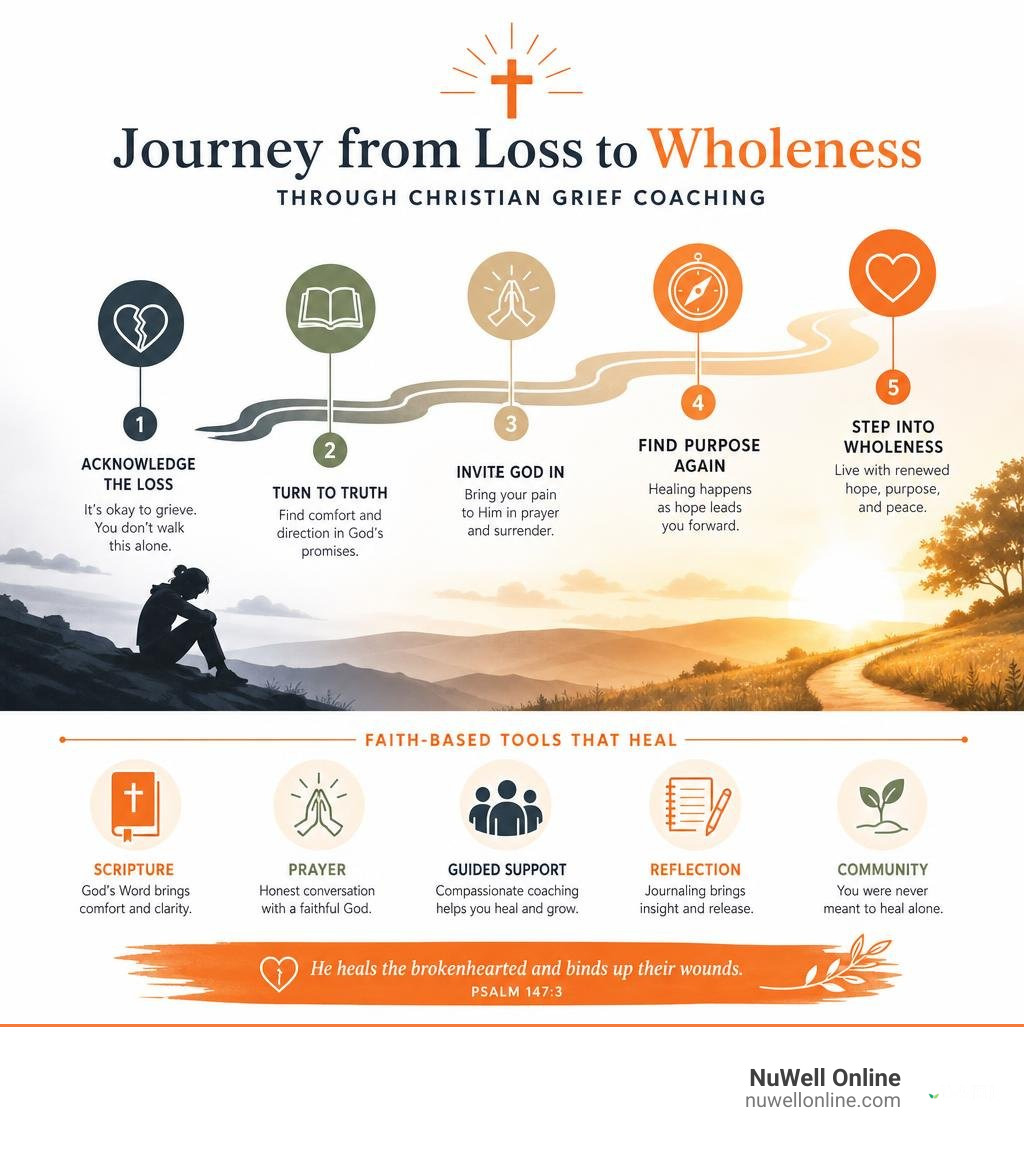
Similar topics to christian grief coach:
What Is a Christian Grief Coach and How Does Faith-Based Coaching Work?
A christian grief coach is a trained professional who integrates proven coaching methodologies with timeless Biblical principles to support individuals navigating deep loss. When loss strikes—whether through the death of a spouse, the passing of a parent, a painful divorce, or the shattering of a lifelong dream—the emotional toll can feel overwhelming. Traditional avenues of care provide practical insights, but believers often find themselves needing a space where their faith is not treated as an afterthought, but as the cornerstone of their restoration.
At NuWell Online, we view grief not as a disease to be cured, but as a tender journey to be walked with grace, truth, and community. A faith-based coach meets you right in the middle of your heartbreak, helping you process pain while anchoring your identity in God’s unfailing promises.
To better understand how this discipline supports believers, explore our dedicated resources on Grief and Loss to see how spiritual guidance fosters emotional resilience.
The framework of faith-based coaching relies on an active partnership between coach, client, and the Holy Spirit. Rather than dwelling indefinitely on pathology, faith-based grief coaching recognizes that God created humans for wholeness. Coaching creates a safe container where doubts can be voiced, tears can be shed without judgment, and practical strategies can be formed to help you adjust to life after severe loss.
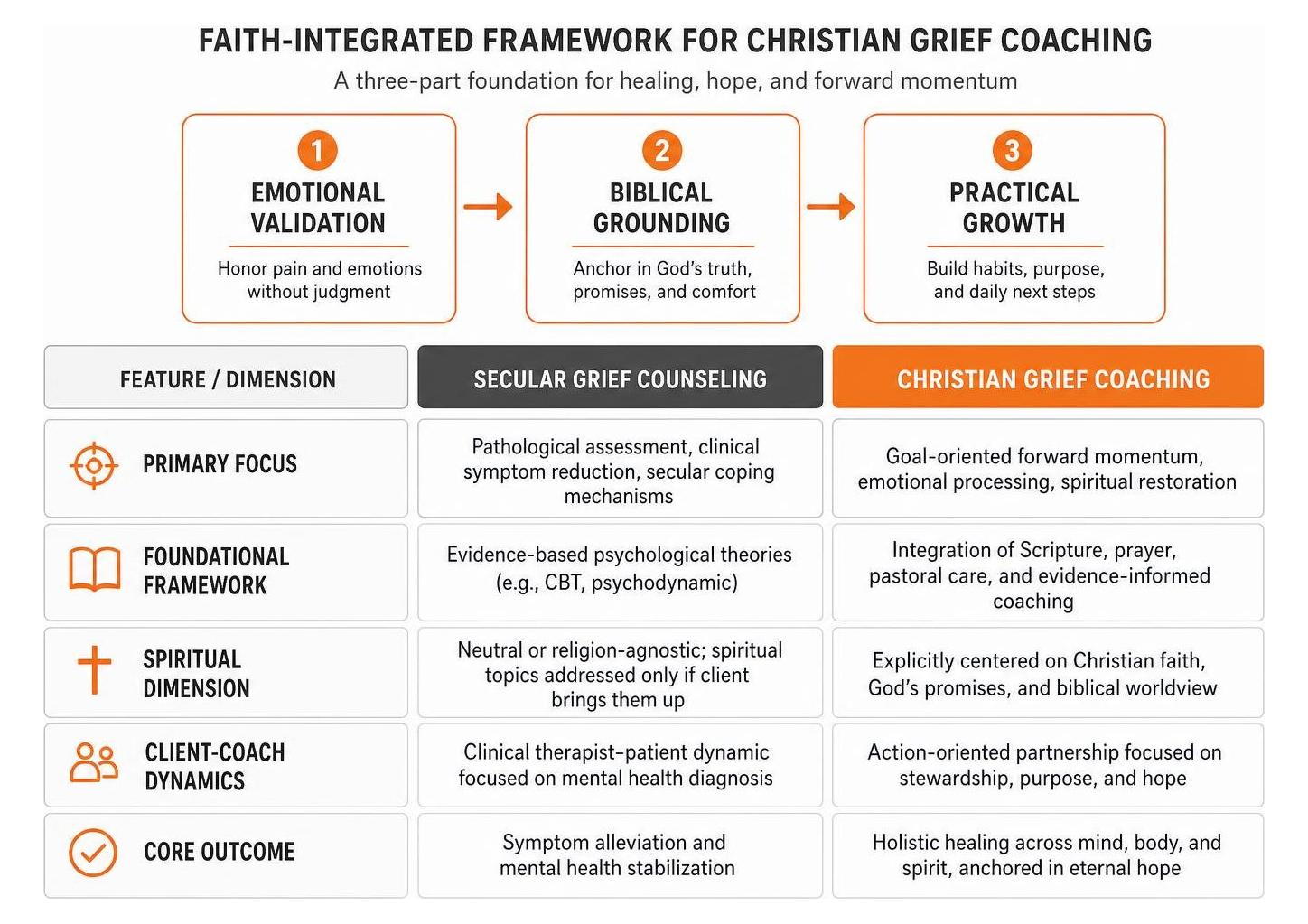
| Feature / Dimension | Secular Grief Counseling | Christian Grief Coaching |
|---|---|---|
| Primary Focus | Pathological assessment, clinical symptom reduction, secular coping mechanisms | Goal-oriented forward momentum, emotional processing, spiritual restoration |
| Foundational Framework | Evidence-based psychological theories (e.g., CBT, psychodynamic) | Integration of Scripture, prayer, pastoral care, and evidence-informed coaching |
| Spiritual Dimension | Neutral or religion-agnostic; spiritual topics addressed only if client brings them up | Explicitly centered on Christian faith, God’s promises, and biblical worldview |
| Client-Coach Dynamics | Clinical therapist-patient dynamic focused on mental health diagnosis | Action-oriented partnership focused on stewardship, purpose, and hope |
| Core Outcome | Symptom alleviation and mental health stabilization | Holistic healing across mind, body, and spirit, anchored in eternal hope |
Difference Between a Christian Grief Coach and a Secular Counselor
Understanding the clear distinction between clinical counseling and faith-integrated coaching is vital when deciding which form of support is right for you. While both professions serve hurting people, their tools, frameworks, and ultimate goals differ in meaningful ways.
Secular grief counseling or psychotherapy primarily focuses on diagnosing and treating clinical mental health conditions, such as major depressive disorder or complicated grief disorder. Therapists often analyze past trauma, underlying psychological patterns, and clinical pathology to bring a patient to symptom relief.
In contrast, a christian grief coach focuses heavily on forward momentum, spiritual identity, and practical restoration. A coach works with clients who are seeking structured encouragement, accountability, and spiritual guidance to move through the fog of grief.
If you are curious about how life coaching integrates spiritual development in broad contexts, take a moment to read about What is a Christian Life Coach on our blog.
At NuWell Online, we have found that while licensed psychotherapy is essential for acute psychiatric distress, faith-based grief coaching provides the perfect forward-focused structure for individuals who want to actively steward their healing while maintaining alignment with Biblical truth.
Faith-Based Principles Integrated with Grief Coaching Practices
How exactly does a coach blend spiritual faith with modern support techniques? The secret lies in a careful, compassionate synthesis of Biblical wisdom and client-centered coaching protocols.
- Scripture Reflection: Instead of relying solely on positive self-talk, coaches introduce life-giving Bible passages that speak directly to sorrow and hope. Verses such as Psalm 34:18 (“The Lord is close to the brokenhearted”) and 1 Thessalonians 4:13 (grieving with hope) provide eternal context for temporary pain.
- Prayer Support: Sessions often begin or conclude with dedicated prayer, inviting the Holy Spirit into the emotional space to bring peace that surpasses human understanding.
- Emotional Validation: Scriptural coaching does not dismiss pain with superficial cliches. Jesus wept at the tomb of Lazarus (John 11:35), demonstrating that sorrow is a holy and appropriate response to loss.
- Spiritual Renewal: Coaching encourages clients to rebuild daily routines, restore quiet time with God, and gently step back into Christian fellowship when they feel ready.
For a deeper dive into scriptural comfort tools, explore our article on Healing the Hurt with Biblical Grief Counseling.
Qualifications and Prerequisites to Become a Certified Christian Grief Coach
The calling to comfort those who mourn is both a sacred trust and a professional responsibility. Because grief touches vulnerable emotional ground, society and professional bodies rightfully expect coaches to hold recognized credentials that guarantee safe, ethical, and high-quality care.
To gain initial certification as a Certified Christian Grief Counselor (CGC-C) through established standards such as those maintained by the American Academy of Grief Counseling (AAGC) and the American Institute of Health Care Professionals (AIHCP), candidates must meet rigorous professional and academic prerequisites prior to enrollment.

Eligible Professions for a Christian Grief Coach Program
Because grief coaching intersects healthcare, pastoral leadership, and emotional wellness, candidates drawn from diverse helping professions are well-suited for formal certification. Prerequisites ensure that candidates already possess foundational interpersonal skills and professional boundaries.
The list of eligible professions for formal Christian grief coach certification includes:
- Registered Nurses (RNs): Healthcare professionals who care for terminally ill patients and support grieving families in hospitals or hospice care.
- Licensed Social Workers (LCSWs/LSWs): Professionals experienced in case management, family support, and community assistance.
- Licensed Psychologists and Professional Counselors: Mental health clinicians seeking specialized faith-based tools to enrich their clinical practice.
- Licensed Ministers, Pastors, and Clergy: Ministry leaders wanting formal coaching structure to better care for their congregations.
- Funeral Directors and Morticians: Industry specialists who guide families through initial loss and desire to offer long-term grief support.
- Pastoral Counselors and Chaplains: Institutional chaplains in healthcare, military, or prison settings who minister to those experiencing crisis.
- Degree Holders in Human Services or Psychology: Individuals holding a bachelor’s or master’s degree in human services, behavioral health, or theology.
At NuWell Online, our team consists of credentialed professionals who combine these academic backgrounds with deep pastoral hearts to ensure the highest standard of care for every client we serve.
Core Requirements and Academic Credentials
For candidates who may not belong to the primary licensed categories above, admission to a professional certification program typically requires a minimum of a bachelor’s degree from an accredited college or university in a relevant field, such as:
- Psychology or Counseling
- Human Services or Social Work
- Divinity, Theology, or Pastoral Studies
- Healthcare Administration or Health Sciences
Holding these credentials ensures that a coach enters the field with an understanding of human development, ethical boundaries, crisis protocols, and communication principles. For a broader view of foundational qualifications across life coaching domains, read our Complete Guide to Christian Life Coaching.
The Certification Process, Timeline, and Professional Standards
Earning a recognized designation as a christian grief coach involves far more than reading a few books. It demands completing a comprehensive, structured curriculum designed to build practical competency in loss care and spiritual integration.
The standard certification pathway requires candidates to complete 305 contact hours of specialized continuing education. Because candidates are typically working professionals, these courses are delivered via distance learning models, offering the flexibility needed to balance career and family commitments.

Coursework Hours, Fees, and Recertification Standards
Candidates enrolling in the 305-contact-hour continuing education program are given two full years from their enrollment date to complete all required modules. This flexible timeline accommodates full-time ministers, healthcare workers, and active coaches.
Here is a breakdown of the structural costs, hours, and maintenance requirements:
- Contact Hours Required: 305 total contact hours of distance learning coursework focusing on grief theory, crisis care, Biblical counseling models, and ethical practice.
- Completion Window: Up to 2 full years to complete coursework at your own pace.
- Initial Certification Fee: $220.00 for the official four-year certification term (plus shipping and handling for physical certificates).
- Term of Certification: Initial credentials remain valid for 4 years from the date of issue.
- Recertification Requirements: To maintain active status, certified coaches must complete 50 or more hours of continuing education within each four-year term, alongside submitting a formal recertification application.
Maintaining strict standards guarantees that certified individuals stay abreast of modern developments in grief care, professional ethics, and scriptural study. To complement your understanding of recovery strategies, check out 7 Powerful Strategies for Overcoming Grief.
Achieving Fellowship Status with a Christian Grief Coach Credential
Upon initial certification, graduates are granted the official credential CGC-C (Certified Christian Grief Counselor). This designation demonstrates to churches, clinical practices, and private clients that the practitioner meets established national standards.
For advanced practitioners dedicated to scholarly excellence and leadership, the American Academy of Grief Counseling offers an elevated recognition known as Fellowship Status. Achieving Fellowship allows a coach to utilize the prestigious FAAGC credential (Fellow, American Academy of Grief Counseling).
To earn Fellowship status, a practitioner must:
- Maintain active CGC-C status in good standing.
- Complete advanced continuing education modules beyond the initial 305 hours.
- Submit documented clinical or coaching case studies, scholarly papers, or demonstrate significant leadership contributions to the field of grief care.
Earning Fellowship status distinguishes a christian grief coach as a master practitioner, opening doors to speak at national conferences, author books, train ministry teams, and expand private practices across Pennsylvania and beyond.
Frequently Asked Questions About Christian Grief Coaching
What do credentials like CGC-C and FAAGC signify?
Credentials like CGC-C (Certified Christian Grief Counselor) and FAAGC (Fellow, American Academy of Grief Counseling) signal to clients, churches, and professional peers that a practitioner has met formal educational requirements, completed hundreds of contact hours in specialized training, and operates under a strict code of professional ethics. It differentiates trained specialists from uncertified individuals.
Is certification valid for life or does it expire?
Certification is not valid for life. Initial certification is granted for a 4-year term. To ensure coaches remain competent and up-to-date with modern practices, recertification requires completing at least 50 hours of continuing education every four years, along with a recertification application fee.
How does biblical grief counseling support emotional healing?
Biblical grief counseling supports emotional healing by pairing evidence-informed emotional tools—such as active listening, grief processing stages, and stress reduction—with the eternal truths of Scripture. It reassures individuals that God cares for their pain, provides spiritual hope beyond earthly suffering, and guides them in discerning new purpose for their lives.
Conclusion

Navigating grief is never easy, but you do not have to walk through the valley of the shadow of death alone. A christian grief coach offers a unique blend of professional expertise, compassionate presence, and unwavering faith, helping you honor your loss while gently guiding you back toward peace and purpose.
At NuWell Online, based in North Huntingdon, PA, we are dedicated to bringing faith-based healing, online pastoral counseling, and Christian coaching directly to your home. Whether you are seeking personal support to navigate a painful chapter or looking to partner with experienced pastoral guides, our team is here for you.
Ready to take your next step toward hope and wholeness? Visit Discover Faithful Pastoral Care and Support to connect with our caring team and schedule your online session today.
This article was researched with the help of AI and reviewed and edited by Jordan Oliver for accuracy, Scripture references, and faithfulness to NuWell’s non-clinical scope.
Jordan is an author, ordained minister, and online host for His Glory TV, sharing biblically grounded insights on faith, prayer, and spiritual growth. She is the co-founder of Triple-Braided Cord Co., an intercessory prayer and healing ministry inspired by Ecclesiastes 4:12.
Jordan holds a Bachelor’s degree in Communications and Religious Studies from High Point University and is a certified Spiritual Life Coach through iCoachLife in Nashville, Tennessee. Drawing from her ministry, coaching, and academic experience, she creates trustworthy, faith-based content that helps readers grow in their relationship with God. Learn more about Jordan here.
