

Understanding Christian Grief Counseling Online
When profound loss turns our world upside down, we need more than surface-level comfort. Bereavement challenges our daily routines, emotional stability, and foundational beliefs about life and God. Christian grief counseling bridges the gap between psychological healing and theological truth. While traditional secular approaches focus primarily on emotional expression, cognitive reframing, and behavioral management, faith-based counseling introduces the redemptive presence of Christ into the deepest valleys of suffering.
At NuWell we have seen that true bereavement recovery requires addressing the spirit just as thoroughly as the mind. Secular therapy offers valuable tools to manage depression and process trauma, but it cannot speak to the eternal destination of our loved ones or God’s sovereign care in our darkest seasons. In contrast, Christian grief counseling views sorrow through a biblical lens, recognizing that human beings were created for relationship with their Creator and designed to find ultimate comfort in His presence.
| Core Dimension | Secular Grief Therapy | Christian Grief Counseling |
|---|---|---|
| Primary Goal | Symptom reduction, cognitive reframing, emotional stabilization | Holistic healing & wholeness, spiritual restoration, Christ-centered hope |
| View of Suffering | An unfortunate, painful reality of human life | A broken world reality held within God’s redemptive grace and eternal promise |
| Core Source of Hope | Personal resilience, internal strength, social support | The resurrection of Jesus Christ, Scripture, and the Holy Spirit |
| Therapeutic Modalities | CBT, ACT, EMDR, Somatic Experiencing | Evidence-based CBT and narrative tools integrated with prayer and Scripture |
| Approach to Existential Questions | Subjective meaning-making constructed by the client | Rooted in biblical truth, divine purpose, and eternal life |
Discovering faith-centered emotional healing allows believers to sit with pain without feeling guilty for weeping. Our faith does not call us to suppress tears or put on a brave face; it invites us to anchor our hearts in an unshakeable foundation.
Biblical Foundations and Scripture in Bereavement
Scripture is filled with honest sorrow and profound lament. The Bible never commands believers to avoid grief; instead, it provides a language for mourning. When Jesus stood at the tomb of His friend Lazarus, He wept openly (John 11:35), proving that profound sorrow is entirely compatible with perfect faith.
If you have lost a husband or wife, these Bible verses after losing a spouse pair ten passages with gentle, practical next steps.
In Christian counseling, specific biblical passages serve as anchors for broken hearts:
- Psalm 34:18: “The Lord is near to the brokenhearted and saves the crushed in spirit.” This promises that God does not abandon us in our darkest moments; He draws nearer.
- 2 Corinthians 1:3–4: God is the “Father of mercies and God of all comfort, who comforts us in all our affliction.” Our sorrow is met with divine mercy, equipping us to comfort others down the road.
- Romans 8:28, 38–39: While loss itself is painful and broken, nothing in creation—neither death nor grief—can separate us from the love of God in Christ Jesus our Lord.
By engaging with biblical principles for processing loss, believers learn to mourn with eternal hope. We do not mourn like those who have no hope (1 Thessalonians 4:13), but we still truly mourn.
Navigating Spiritual Doubts, Anger, and Crisis of Faith
One of the hardest parts of bereavement is the sudden emergence of doubts and unexpected anger. Believers often ask: Why did God let this happen? Where was He when I prayed for healing? Did I lack sufficient faith?
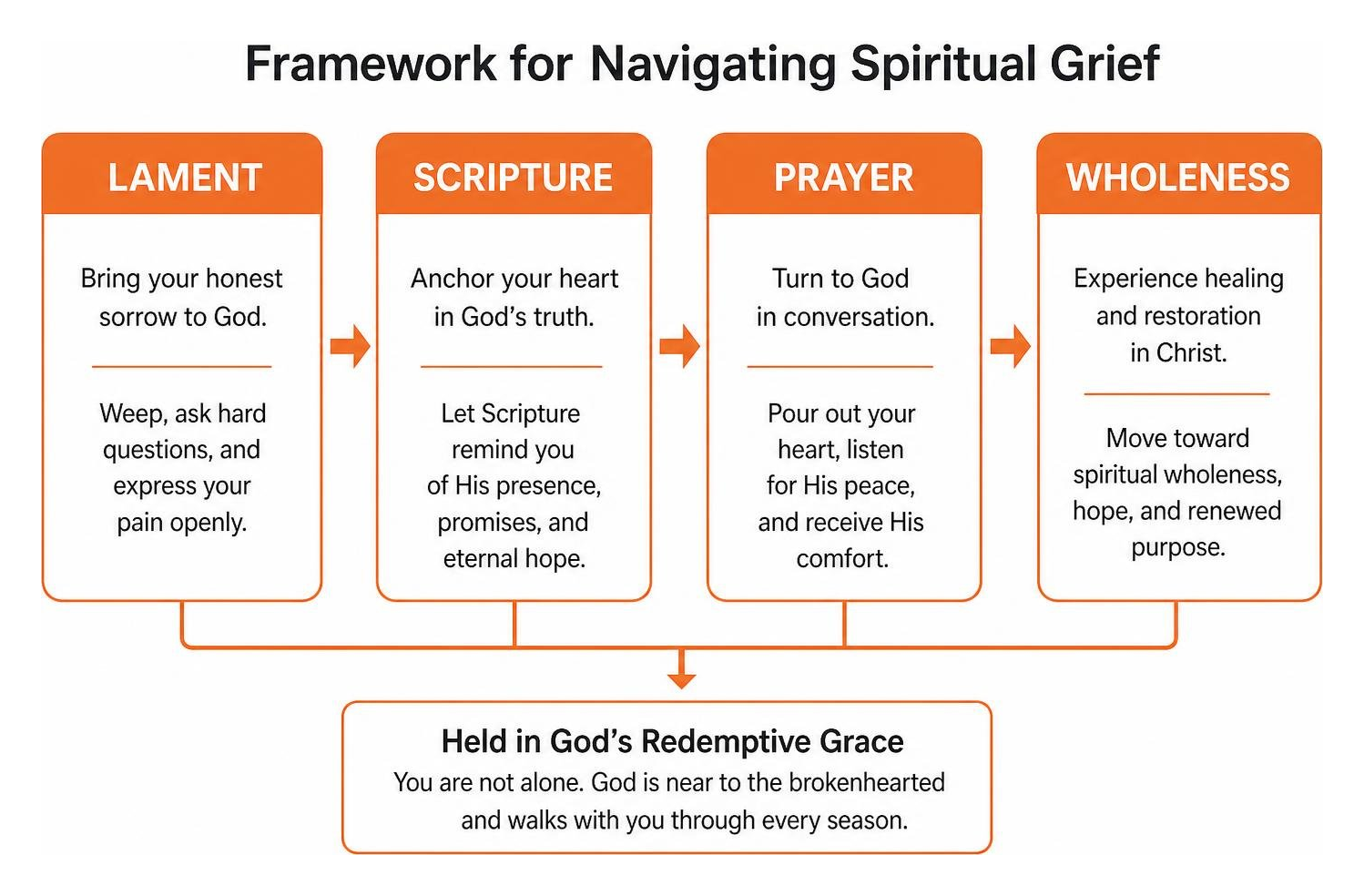
These questions are not signs of spiritual failure. Biblical figures like David, Job, Jeremiah, and Habakkuk wrestled honestly with God during intense affliction. In Christian grief care, we make space for these raw emotions. Anger is often love with nowhere to go, or pain crying out for divine justice. Rather than burying these feelings, pastoral counseling helps you direct honest lament toward God, inviting the Holy Spirit to bring peace.
At NuWell we have found that acknowledging these spiritual battles is vital. Unaddressed grief can leave room for spiritual discouragement, isolation, and despair. Moving through these spiritual challenges with wise guidance helps disarm feelings of guilt and unworthiness, strengthening your spiritual resilience and reminding you that you were created for more than remaining trapped in sorrow.
Core Benefits and Scope of Virtual Faith-Based Care
Seeking support while navigating profound sorrow can feel exhausting. The simple act of driving across town, sitting in a clinical waiting room, and rushing back into daily life can add unnecessary strain to an already overwhelmed soul. Online faith-based counseling meets you in the comfort, privacy, and safety of your own home.
Virtual care removes geographical boundaries, allowing you to connect directly with dedicated pastoral counselors and certified Christian coaches regardless of where you live. For believers in rural areas or small towns where faith-aligned clinicians are scarce, finding faith-based therapy online ensures access to professional, Christ-centered care.
The core advantages of virtual Christian grief counseling include:
- Emotional Safety & Privacy: Grieving from your own living room or private space allows you to express deep emotions without fear of judgment.
- Scheduling Flexibility: Virtual care fits into your family and work responsibilities without the stress of commute times.
- Access to Aligned Faith Specialists: You do not have to settle for general secular support if you want a counselor who shares your worldview and theological convictions.
- Continuity of Care: Online sessions make it easier to stay consistent with your healing journey even during travel, illness, or major life transitions.
Types of Loss Addressed in Christian Grief Counseling Online
Grief is not limited to the death of an elderly loved one; it takes many forms across the human experience. At NuWell, our counselors walk alongside individuals facing diverse types of loss:
- Loss of a Spouse or Partner: Navigating the profound loneliness, identity shift, and daily void left by the passing of a life partner.
- Parental & Child Bereavement: Carrying the heavy, unnatural sorrow of losing a child or processing the deep anchor lost when a parent passes away.
- Miscarriage, Stillbirth, and Infant Loss: Providing a safe harbor for the often unspoken, disenfranchised grief of losing an unborn baby.
- Complicated & Traumatic Grief: Processing sudden deaths, accidents, violence, or prolonged illnesses that leave lasting emotional shock.
- Divorce and Relational Estrangement: Mourning the death of a marriage, broken family ties, and shattered dreams.
- Anticipatory Grief: Supporting families watching a loved one decline through terminal illness or dementia.
- Vocational and Major Life Transitions: Processing the loss of health, retirement, job loss, or sudden lifestyle shifts.
Accessing comprehensive online grief support ensures that whatever valley you are walking through, you do not have to carry the burden alone.
Overcoming Geographic and Stigma Barriers
Research reveals that 87% of Christian adults who experience significant grief report that their faith is a critical component in their coping process. Furthermore, 48% of highly religious Americans prefer a therapist who shares their religious convictions. Online counseling removes the frustration of limited local options.
Virtual counseling also helps dismantle the unfortunate stigma surrounding mental health inside some church communities. Believers sometimes feel pressure to appear strong or fear being perceived as spiritually weak if they admit to struggling with deep depression or anxiety after a loss. Online sessions offer a private, judgment-free space where you can be authentic and receive compassionate care.
The Virtual Counseling Process and Clinical Structure
Beginning virtual counseling is straightforward, structured, and designed to bring relief from the very first session. It combines evidence-based clinical practices with deep spiritual care.

What to Expect During Christian Grief Counseling Online
Your journey begins with an initial intake assessment where your counselor listens to your story, explores the specifics of your loss, and assesses your emotional, physical, and spiritual well-being. Together, you establish clear goals focused on emotional stabilization, renewed daily function, and spiritual renewal.
A typical online session generally follows this thoughtful rhythm:
- Opening Check-In & Prayer: Centering the session in God’s presence and reviewing your emotional week.
- Exploration & Processing: Unpacking specific challenges, sorrow triggers, memories, and spiritual questions in a safe environment.
- Scriptural & Clinical Integration: Applying practical psychological tools alongside relevant biblical insights to reframe cognitive distortions and ease emotional pain.
- Actionable Homework & Reflection: Agreeing on practical steps between sessions, such as journaling, scripture meditation, or healthy daily rhythms.
- Closing Pastoral Prayer: Committing your heart, sorrow, and progress to the Lord’s care.
If you are exploring structured encouragement, working with a Christian grief coach provides forward-looking accountability, helping you rebuild daily routines while honoring the memory of what was lost.
Clinical Modalities Integrated with Biblical Truth
Biblical pastoral counseling does not reject clinical science; it integrates proven, evidence-based psychological tools under the authority of Scripture. God has graciously revealed insights through science and psychology that can be used to bring relief to our minds and bodies.
At NuWell we have seen that combining modern clinical modalities with timeless spiritual disciplines produces powerful, lasting transformation:
- Cognitive Behavioral Therapy (CBT) & Scripture: CBT identifies and challenges distorted thought patterns (such as catastrophic thinking or false guilt). We align this practice with Romans 12:2 (“be transformed by the renewal of your mind”) and 2 Corinthians 10:5 (“take every thought captive”), replacing self-condemning lies with God’s truth.
- Narrative Therapy & Redemptive Story: Helping you honor the story of your relationship with your loved one while recognizing that God is still writing the remaining chapters of your life on earth.
- Somatic & Nervous System Regulation: Using breathing exercises, prayerful stillness, and healthy rhythms to calm the physical stress responses that often accompany deep grief.
- Spiritual Disciplines: Utilizing guided prayer, silent reflection, and lament psalms to process emotional weight before God.
Understanding these frameworks for Christian grief support helps you see how mental health tools and spiritual truths work harmoniously toward healing and wholeness.
How to Choose a Counselor, Overcome Challenges, and Mobilize Support
Finding the right counselor is essential for your recovery journey. While virtual counseling offers incredible convenience, choosing a qualified practitioner who aligns with your core Christian convictions requires careful consideration.
Evaluating Credentials, Licensure, and Doctrinal Alignment
When searching for a counselor, look closely at their professional background and ministry experience:
- Credentials & Education: Check whether the counselor holds state licensure (such as LPC, LMFT, or LCSW), a certified pastoral counseling credential, or recognized Christian coaching certifications from accredited institutions.
- Theological Foundation: Ensure their statement of faith aligns with sound Christian doctrine. A good Christian counselor should comfortably articulate how they integrate prayer, Scripture, and theology into their clinical care.
- Grief Specialization: Ask about their specific experience in handling bereavement, traumatic loss, and complicated grief.
For those navigating bereavement as a believer, working with a professional who shares your faith ensures you will never have to edit out your love for Christ during therapy.
Recommended Resources for Grief Recovery
In addition to one-on-one virtual counseling, walking alongside others and engaging with uplifting resources can support your healing:
- Recommended Devotionals & Books:
- A Grief Observed by C.S. Lewis
- Dark Clouds, Deep Mercy: Discovering the Grace of Lament by Mark Vroegop
- Shattered Dreams: God’s Unexpected Path to Joy by Larry Crabb
- Biblical Support Communities:
- Church-based pastoral care ministries, small groups, and community bereavement cohorts
How Friends and Family Can Support the Healing Journey
If someone you love is currently receiving Christian grief counseling online, you can play a vital role in their recovery:
- Practice Patient, Active Listening: Let them talk about their loss without offering quick fixes or spiritual clichés like “Everything happens for a reason” or “They are in a better place.” Simple presence is far more comforting than uninvited advice.
- Offer Practical, Tangible Help: Bring a meal, assist with yard work, run errands, or watch their children during their scheduled online counseling sessions.
- Pray Consistently: Lift them up in prayer daily, asking God to grant them comfort, restorative sleep, and spiritual peace.
- Honor Their Unique Timeline: Grief does not follow a neat calendar. Do not expect them to “bounce back” after a few months; walk beside them patiently for the long haul.
Frequently Asked Questions About Faith-Based Grief Recovery
How does Christian grief counseling address anger toward God after a profound loss?
Christian counseling provides a safe, grace-filled environment where you can express honest emotions without fear of judgment. Counselors look to biblical examples of lament—such as the Psalms and Habakkuk—to show that crying out to God in pain is an act of real relationship, not a lack of faith. By bringing your sorrow into the open, counseling helps you work through emotional pain and rediscover God’s gentle, comforting presence.
How does virtual Christian grief therapy maintain privacy and technological security?
Professional virtual counseling takes place through secure, HIPAA-compliant telehealth platforms featuring end-to-end encryption. Your personal health information, session notes, and video conversations remain confidential and protected under standard medical privacy laws, just like in-person clinical visits.
What is the difference between a Christian grief coach and a licensed pastoral therapist?
A licensed pastoral therapist or Christian clinical counselor is trained and licensed to diagnose and treat clinical mental health conditions (such as major depressive disorder, complicated grief, and PTSD), using clinical modalities integrated with biblical wisdom. A certified Christian grief coach focuses on forward-looking encouragement, spiritual discipleship, habit building, and practical life adjustments following a loss, without providing clinical mental health diagnoses.
Conclusion
Loss can feel overwhelming, shaking the foundations of your daily life. Yet in the midst of your sorrow, you do not have to walk this road alone. God has made provision for your healing and wholeness through His Word, His Holy Spirit, and wise, compassionate counselors who are equipped to walk beside you through the valley.
At NuWell Online, our dedicated pastoral counselors and certified Christian coaches integrate clinical tools with timeless biblical truths to help you find peace, restore your strength, and remember that you were created for more. We are here to support you with professional, faith-anchored virtual care.
Take the next step in your healing journey today. Reach out and schedule your confidential session through our online Christian counseling services, and let us walk with you toward Christ-centered comfort and renewal.
This article was researched with AI and heavily edited by Jordan Oliver for accuracy and relevance.
Jordan is an author, ordained minister, and online host for His Glory TV, sharing biblically grounded insights on faith, prayer, and spiritual growth. She is the co-founder of Triple-Braided Cord Co., an intercessory prayer and healing ministry inspired by Ecclesiastes 4:12.
Jordan holds a Bachelor’s degree in Communications and Religious Studies from High Point University and is a certified Spiritual Life Coach through iCoachLife in Nashville, Tennessee. Drawing from her ministry, coaching, and academic experience, she creates trustworthy, faith-based content that helps readers grow in their relationship with God. Learn more about Jordan here.
