

When Grief Feels Too Heavy to Carry Alone
Biblical grief support services are structured, faith-rooted resources — including support groups, pastoral counseling, devotionals, and online programs — that help Christians process loss through Scripture, community, and prayer.
Here are the most trusted options available in 2026:
- Structured Support Groups — Multi-week, church-hosted video and discussion programs available in-person and online at thousands of locations worldwide
- Peer-to-Peer Gatherings — Gatherings, structured workshops, and weekend retreats rooted in faith
- Church-Led Grief Curriculums — Multi-week grief support curriculums designed for any denomination
- Biblical counseling — One-on-one or intensive sessions integrating Scripture with emotional healing
- Pastoral Consultations — Phone consultations, book resources, and referrals to licensed Christian counselors
- Online courses and devotionals — Digital tools for grief management, including Christian mindfulness and journaling
Grief is one of the heaviest experiences a person can carry. It doesn’t follow a neat schedule. It resurfaces on ordinary Tuesday afternoons, on birthdays, during holidays, and in quiet moments when you reach for your phone to call someone who is no longer there.
For Christians, grief can bring an added layer of confusion. Should I be this sad? Is my faith not strong enough? The answer, rooted in Scripture, is a clear no. Grief is not a failure of faith.
At NuWell, we have seen how often people come to us feeling isolated in their pain — carrying loss quietly because they don’t want to be a burden, or because well-meaning friends offered phrases like “at least they’re in a better place” and then moved on. That kind of loneliness in grief is deeply common, and it doesn’t have to be the end of the story.
The good news is that you were created for more than carrying this alone. Biblical grief support brings together Scripture, community, and compassionate care to meet you exactly where you are — and walk with you toward healing and hope.
The Foundation of Biblical Grief Support Services
When we talk about Biblical grief support services, we aren’t just talking about a “religious version” of therapy. We are talking about a foundation built on the character of God. In the secular world, grief is often treated as a problem to be solved or a stage to be completed. In the Biblical world, grief is seen as a natural, godly response to the brokenness of our world.

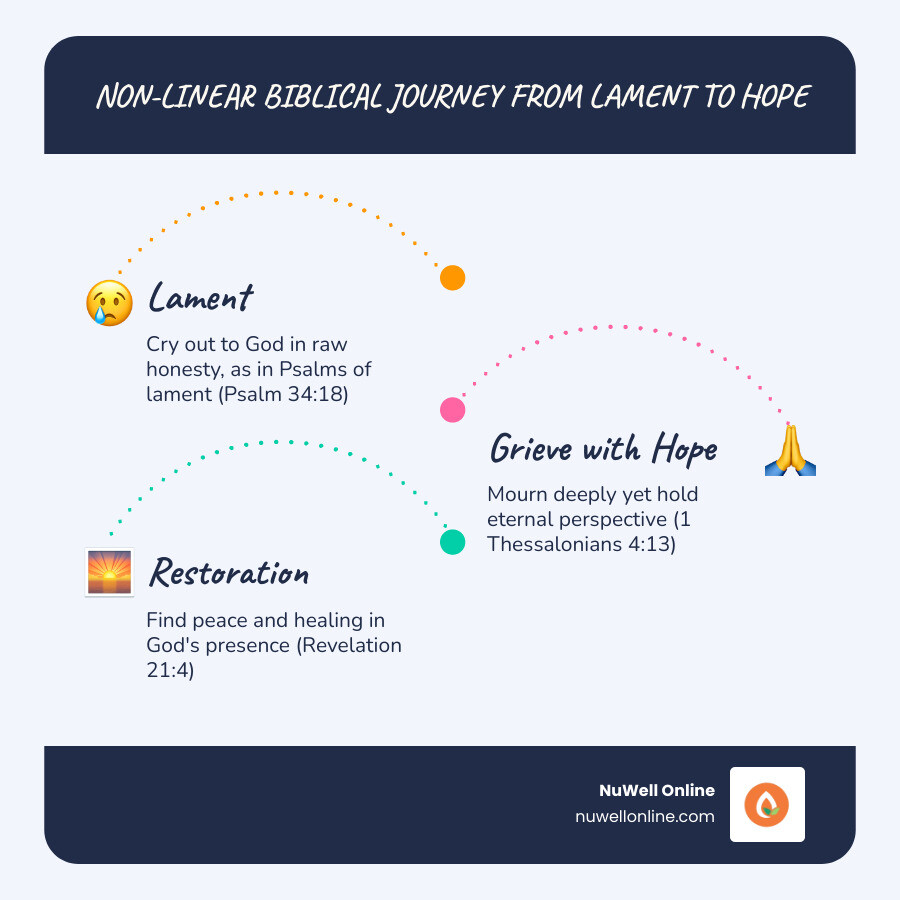
The Bible doesn’t shy away from the raw reality of loss. In fact, it gives us a language for it. Scripture like Psalm 34:18 reminds us that “The Lord is close to the brokenhearted and saves those who are crushed in spirit.” This isn’t just a nice sentiment; it is a promise of divine presence. When we lean into Grief and Loss support, we are acknowledging that our pain matters to the Creator.
Grief as an Act of Worship and Love
It might sound strange to think of tears as worship, but at NuWell, we have found that grief is often an overflow of love. If you didn’t love deeply, you wouldn’t grieve deeply. James 1:17 tells us that every good and perfect gift comes from above. When we mourn a loved one, we are essentially acknowledging the “good gift” God gave us in that person.
Viewing grief this way changes the perspective from one of pure despair to one of honoring the deceased. It is a visceral portrait of God’s generosity. By allowing ourselves to feel the weight of the loss, we turn our pain into praise for the Giver of that life. This shift is a core component of grief counseling, helping individuals see their sorrow not as a lack of faith, but as a testament to the love God placed in their hearts.
Scripture as the Anchor for the Brokenhearted
In the middle of a storm, you need an anchor that won’t budge. For those Grieving As A Christian, that anchor is the Word of God. 1 Thessalonians 4:13 tells us that we do not grieve like those who have no hope. We still grieve—Jesus Himself wept at the tomb of Lazarus—but our grief is infused with the promise of the resurrection and Revelation 21:4, which promises a day when God will wipe away every tear.
At NuWell, we emphasize Learning With Loss And Grief by meditating on verses like Matthew 11:28, where Jesus invites the weary to find rest. This eternal perspective doesn’t make the physical absence of a loved one easier, but it provides the spiritual nourishment needed to survive the day.
Faith-Based Support Groups and Community Programs
One of the most powerful tools in Biblical grief support services is the power of the “Body of Christ” walking together. Healing often happens best in the context of community.
The Impact of Structured Faith-Based Programs
Structured programs are highly effective for good reason. Countless individuals have found hope through multi-week cycles that combine video-based teaching from respected Christian experts with small-group discussions. At NuWell, we often recommend these types of groups because they provide a safe place to realize that what you are feeling is normal.
Similarly, comprehensive Christian programs offer curriculums that focus on nourishing the mind, body, and soul. They include:
- Relevant Scripture assignments
- Bible journaling
- Practical self-care tips
Thousands of churches have implemented programs like these because they empower lay leaders to provide high-quality care without needing to be professional therapists.
Finding Hope through Biblical Grief Support Services
The benefit of these programs is the “sacred witnessing” of each other’s stories. When you sit in a room with others who share your faith, there is a mutual understanding that secular groups sometimes lack. You aren’t just sharing “coping skills”; you are sharing the hope of Christ. These groups offer emotional safety and Powerful Strategies For Overcoming Grief that are rooted in spiritual truth.
Biblical Counseling vs. Secular Therapy: A Holistic Approach
While secular therapy offers valuable tools for managing symptoms, Biblical counseling goes deeper into the spiritual wounds that loss can inflict.
| Feature | Secular Grief Therapy | Biblical Grief Counseling |
|---|---|---|
| Primary Tool | Psychological theories | Holy Scripture |
| Goal | Symptom management/Acceptance | Restoration and hope in Christ |
| View of Grief | A psychological process | A spiritual and emotional response |
| Source of Strength | Internal resilience | The Holy Spirit and community |
Leading biblical counseling frameworks emphasize that the Bible is the centerpiece of the conversation, not just an add-on.
Integrating Spiritual Truth with Emotional Recovery
At NuWell, we have found that integrating Biblical truths with evidence-based practices allows for a holistic healing process that addresses the soul, mind, and body. We don’t ignore the science of how the brain processes trauma; instead, we bring that science under the authority of God’s Word. This approach ensures that we aren’t just “talking about feelings,” but are actively seeking the “perfect peace” promised in Isaiah 26:3.
Practical Resources for Daily Healing and Lament
Healing doesn’t just happen in a counselor’s office; it happens in the quiet moments of your daily life.

Devotionals, Journaling, and Journaling
One of the most helpful things you can do is learn the art of “Biblical lament.” This is the practice of bringing your honest complaints and sorrows to God, just as the psalmists did. We often recommend books like A Grief Observed by C.S. Lewis or Grieving with Hope by Samuel J. Hodges.
Practical tools include:
- Linking Objects: Keeping a piece of clothing or a “memory box” to feel close to the deceased.
- Journaling: Writing out your prayers and “if onlys” to process them with the Lord.
- Thinking Exercises: Using Romans 12:2 to renew your mind when negative or intrusive thoughts take over.
If you are a friend of someone mourning, knowing What To Say To Someone Grieving is crucial—often, less is more.
Utilizing Biblical Grief Support Services Online
In our modern world, accessibility is key. Digital workshops and “mental fitness” courses offer tools for remote grief management. These programs often incorporate Christian mindfulness—focusing on the presence of God in the current moment—to reduce anxiety and fear.
Walking Together: How the Body of Christ Supports the Grieving
The church is called to bear one another’s burdens (Galatians 6:2). This means more than just showing up for the funeral. It means a long-haul commitment to those whose grief lingers.
Avoiding Platitudes with Compassionate Presence
We have all heard them: “God needed another angel” or “At least they aren’t suffering anymore.” While intended to be kind, these platitudes can actually isolate the griever. As experienced biblical counselors suggest, the best support is humble and “lovingly assertive.”
Instead of saying, “Let me know if you need anything,” try:
- “I’m coming over to mow the lawn on Thursday; will you be home?”
- “I’m at the grocery store; what can I pick up for you?”
- Simply sitting in silence and listening without trying to “fix” the pain.
The Role of Prayer and Community Advocacy
The Body of Christ has a diverse set of gifts. Some are great at childcare, others at meal delivery, and others at the ministry of prayer. At NuWell, we have found that the most effective church support happens when a community remembers the “concentric circles of loss”—not just the death itself, but the loss of income, social standing, or household help that often follows.
Frequently Asked Questions about Faith-Based Healing
What does the Bible say about the length of grief?
The Bible does not put a stopwatch on your sorrow. Ecclesiastes 3:4 reminds us there is a “time to weep and a time to laugh,” but it doesn’t say how long that season lasts. Grief is non-linear and can linger for years, resurfacing during seasonal triggers or milestones. God is patient with your process.
How can I help a friend who is grieving without being intrusive?
Be “lovingly assertive.” Don’t wait to be asked for help; offer specific, practical acts of service. Ask open-ended questions like, “What has been the hardest part of this week?” and avoid offering “just” solutions. Your presence is more valuable than your answers.
Are online biblical grief support services as effective as in-person groups?
Yes. While in-person community is wonderful, online services offer a level of accessibility and anonymity that can lead to significant breakthroughs. At NuWell, our online pastoral counseling and courses provide the same Scripture-integrated tools as our in-person sessions, ensuring no one has to walk alone, regardless of their location.
Conclusion
If you are reading this and your heart is heavy, please know that there is hope. You don’t have to navigate the “tangled ball of emotions” that is grief by yourself. Whether through a structured support group, a 5-hour intensive counseling session, or a daily devotional, Biblical grief support services are here to point you back to the One who promises to restore your soul.
At NuWell Online, our mission is your holistic healing. We believe you were created for more than a life defined by loss. Our pastoral counselors and certified Christian coaches are ready to walk alongside you, integrating the timeless truths of the Bible with practical, evidence-based tools for your journey.
Learn more about our Pastoral Counseling Services and take the first step toward finding the peace that surpasses all understanding. Your journey toward restoration starts here.
NuWell Online Faith-based healing for the mind, body, and soul. Serving North Huntingdon, PA, and the global Christian community. https://nuwellonline.com/
This article was researched with the help of AI and reviewed and edited by Jordan Oliver for accuracy, Scripture references, and faithfulness to NuWell’s non-clinical scope.
Jordan is an author, ordained minister, and online host for His Glory TV, sharing biblically grounded insights on faith, prayer, and spiritual growth. She is the co-founder of Triple-Braided Cord Co., an intercessory prayer and healing ministry inspired by Ecclesiastes 4:12.
Jordan holds a Bachelor’s degree in Communications and Religious Studies from High Point University and is a certified Spiritual Life Coach through iCoachLife in Nashville, Tennessee. Drawing from her ministry, coaching, and academic experience, she creates trustworthy, faith-based content that helps readers grow in their relationship with God. Learn more about Jordan here.
