
Why Natural Remedies for Weight Loss Are Worth a Second Look
Natural remedies for weight loss — from fiber-rich foods and green tea to sleep hygiene and stress management — are among the most researched, accessible, and sustainable tools available for managing your weight without prescription drugs or surgery.
Here is a quick overview of the most effective, science-backed options:
| Natural Remedy | How It Helps | Evidence Level |
|---|---|---|
| High-protein diet | Reduces hunger, preserves muscle | Strong |
| Glucomannan fiber | Expands in stomach, slows digestion | Moderate-Strong |
| Green tea / coffee | Boosts metabolism, reduces appetite | Moderate |
| Whole foods / less sugar | Lowers calorie intake naturally | Strong |
| Sleep (7-9 hours) | Balances hunger hormones | Strong |
| Stress management | Lowers cortisol-driven cravings | Strong |
| Intermittent fasting | Reduces eating window, cuts calories | Moderate-Strong |
| Berberine | Supports blood sugar and metabolism | Moderate |
| Movement (cardio + strength) | Burns calories, preserves muscle | Strong |
There is a lot of noise online when it comes to weight loss. Bold claims. Miracle supplements. Cleanses that promise everything and deliver very little.
The truth is more straightforward — and more hopeful.
Most people searching for natural remedies aren’t just chasing a number on the scale. They want to feel well. To have energy. To care for the body they’ve been given.
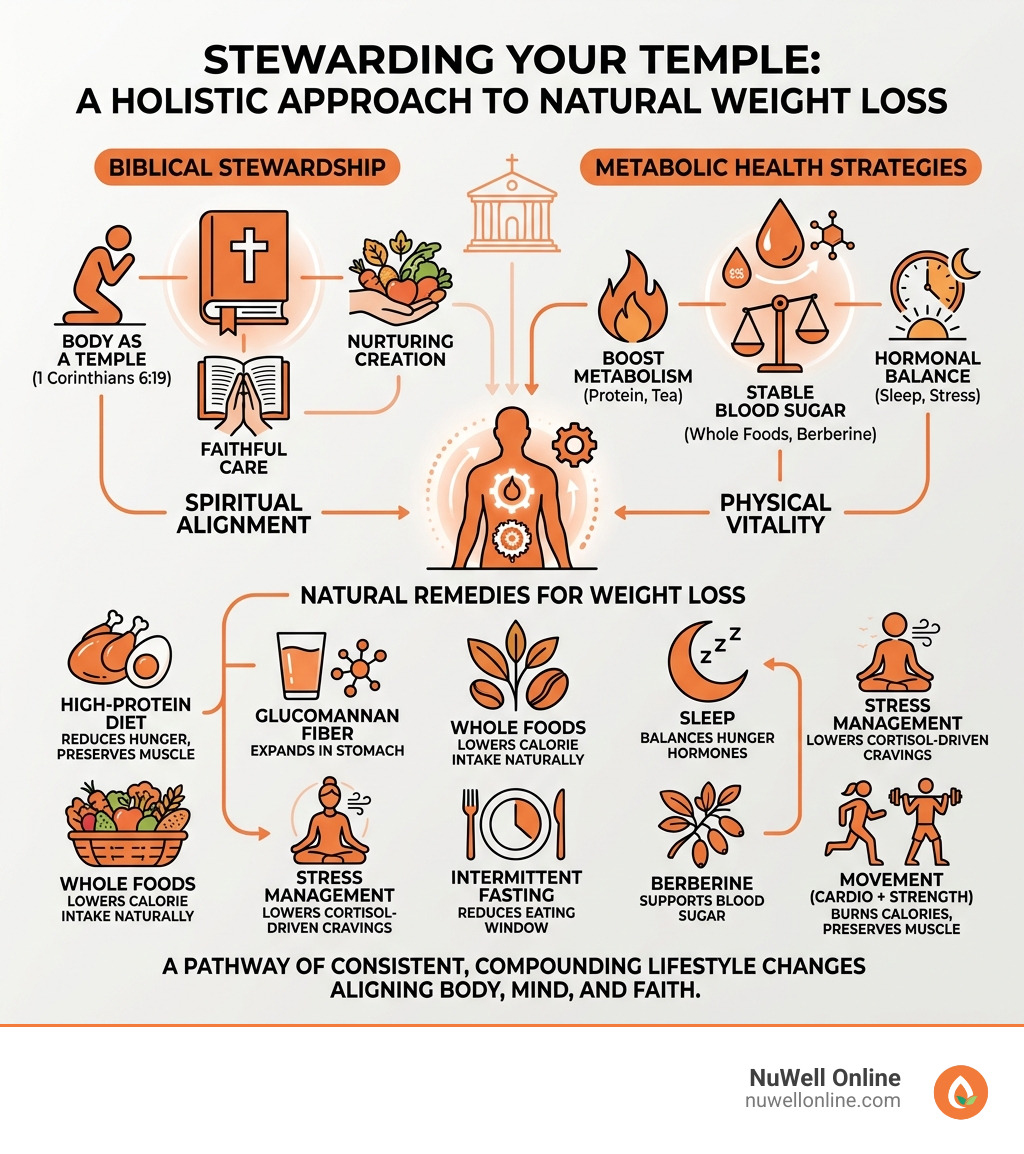
At NuWell Online, we believe that is a deeply spiritual pursuit. Scripture reminds us in 1 Corinthians 6:19-20 that the body is a temple of the Holy Spirit — and how we steward it matters. That means the journey toward a healthier weight isn’t just physical. It is an act of worship.
What the research consistently shows is this: sustainable weight loss comes from consistent, compounding lifestyle changes — not quick fixes. The methods that work are the ones that align with your biology, your habits, and your values.
This article cuts through the clutter. We’ll look at what the science actually says about the most promising natural remedies, which supplements are worth considering, which ones to avoid, and how your mental and spiritual health play a bigger role in weight management than most people realize.
The Power of Protein and Whole Foods: Nourishing Your Temple

When we talk about natural remedies for weight loss, the most powerful tool in your arsenal isn’t found in a pill bottle; it’s found on your plate. At NuWell, we often refer to protein as the “king” of weight loss nutrients. Why? Because it fundamentally changes how your body signals hunger. High-protein intake increases the release of satiety hormones while suppressing ghrelin, the hormone that tells your brain you’re hungry.
Incorporating eggs—often called the “ultimate” weight loss food—into your breakfast can keep you full for hours. Research suggests that those who eat a high-protein breakfast consume fewer calories throughout the rest of the day. Beyond just satiety, protein has a higher “thermic effect,” meaning your body burns more calories just digesting it compared to fats or carbs.
Focusing on whole, single-ingredient foods is a foundational step in stewardship. These foods are naturally filling and make it much harder to overeat. When we move away from processed items and toward what God provided in nature, we naturally improve our nutrition without the need for obsessive calorie counting. Science backs this up: 29 ways to lose weight naturally often start with prioritizing these nutrient-dense options.
Effective Natural Remedies for Weight Loss: The Role of Fiber
One of the most fascinating natural remedies for weight loss is glucomannan, a dietary fiber derived from the konjac plant. This isn’t just any fiber; it is exceptionally viscous. In fact, a single capsule can turn an entire glass of water into a thick gel. When you take it before a meal, it takes up space in your stomach, leading to a natural reduction in food intake.
Soluble fibers like glucomannan also feed the friendly bacteria in your gut, which can improve your metabolic health. By slowing down the absorption of sugar and cholesterol, fiber helps maintain steady blood sugar levels, preventing the “crashes” that lead to late-afternoon cravings. To support your journey, we recommend these 5 digestive tips to boost well-being to ensure your gut is functioning optimally.
Eliminating Processed Temptations
Modern processed foods are often “hyper-palatable,” meaning they are engineered to bypass our fullness signals and encourage overeating. Added sugar is a primary culprit. On average, Americans consume about 17 teaspoons of added sugar every day. This hidden sugar triggers dopamine releases in the brain similar to addictive substances.
In fact, it is estimated that almost 20% of people fulfill the clinical criteria for food addiction. At NuWell, we view the transition to whole foods as more than a diet; it’s a way to reclaim self-control. By sticking to the non-negotiables of functional nutrition, you can break the cycle of sugar dependency and nourish your body with the fuel it was designed to use.
Science-Backed Natural Remedies for Weight Loss: Beverages and Timing

How and when you drink can be just as important as what you eat. Hydration is often overlooked, but it is one of the simplest natural remedies for weight loss. Drinking water—especially 30 to 120 minutes before a meal—can increase metabolism by 24–30% for about an hour and help you feel fuller faster.
The Metabolic Benefits of Green Tea and Coffee
If you enjoy a morning brew, you’re in luck. Coffee and green tea are packed with antioxidants and bioactive substances. Green tea contains catechins like EGCG, which work synergistically with caffeine to boost fat oxidation. While it won’t replace a healthy diet, green tea extract has been shown to burn a modest amount of extra calories per day.
Caffeine itself can boost metabolism by 3–11%. However, be mindful that your body can develop a tolerance to caffeine, so it’s best used as a supportive tool rather than a primary solution. Research on 10 natural appetite suppressants suggests that these beverages, when consumed without added sugars, are excellent additions to a natural weight management plan.
Mindful Eating and Portion Control
The “how” of eating matters. Using smaller plates can psychologically trick your brain into thinking you’re eating more than you are. Slower chewing gives your brain the 20 minutes it needs to realize the stomach is full.
A unique “behavior modifier” we often recommend is brushing your teeth immediately after dinner. This signals to your brain that “the kitchen is closed” and alters the taste of food, making that late-night snack far less appealing. Embracing these habits is part of natural health, focusing on awareness rather than deprivation.
Herbal Support and Natural Supplements: What Actually Works?
While lifestyle is the foundation, some natural remedies for weight loss in supplement form show genuine promise in clinical trials.
Understanding Berberine and Gut Health
Berberine is a compound found in several plants that has gained massive popularity recently, often dubbed “nature’s support for metabolic health.” It works by activating an enzyme called AMP-activated protein kinase (AMPK), which plays a crucial role in regulating metabolism and insulin sensitivity.
Clinical studies have shown that berberine can help reduce waist circumference and support healthy blood sugar levels. For those interested in the science, there are 4 ways berberine may help you lose weight, including its ability to inhibit the growth of new fat cells. We also recommend pairing metabolic support with probiotics, as a healthy gut microbiome is increasingly linked to easier weight management.
Natural Remedies for Weight Loss: The Truth About Garcinia and CLA
Garcinia Cambogia is a tropical fruit extract containing hydroxycitric acid (HCA). Research suggests HCA may inhibit citrate lyase, an enzyme your body uses to make fat. It may also increase serotonin levels, potentially reducing emotional eating. While the effects are often modest—averaging about 2 pounds more than a placebo in studies—it remains a popular choice for those looking for how Garcinia Cambogia can help.
Conjugated Linoleic Acid (CLA) is another popular supplement, a type of fatty acid found in dairy and beef. While animal studies were highly promising, human results have been more mixed, showing only a small impact on body fat percentage.
| Supplement | Primary Mechanism | Study Dosage |
|---|---|---|
| Berberine | Activates AMPK, improves insulin sensitivity | 500-1,500 mg/day |
| Garcinia Cambogia | Inhibits fat-producing enzymes | 500 mg 3x/day |
| Glucomannan | Physical satiety (fiber) | 1g 3x/day |
| Green Tea Extract | Increases fat oxidation (EGCG) | 250-500 mg/day |
The Spiritual and Psychological Roots of Weight Management
At NuWell Online, we believe you cannot separate the health of the body from the health of the soul. Stress management is a vital “remedy.” When we are chronically stressed, our bodies produce cortisol, a hormone that encourages fat storage, especially in the abdominal area.
Sleep hygiene is equally critical. Sleep deprivation disrupts the hormones ghrelin and leptin, leading to intense cravings for high-carb, sugary foods. One study found that people who were sleep-deprived were 55% more likely to become obese. Addressing these issues through functional nutrition in mental health allows us to treat the root cause of weight gain rather than just the symptoms.
Overcoming Food Addiction and Loneliness
Loneliness has been described as a public health crisis, with health impacts comparable to smoking 15 cigarettes a day. For many, food becomes a way to cope with social disconnection or emotional pain.
At NuWell, we have found that addressing the heart is the first step to healing the body. Through pastoral care and community support, we help individuals identify “idols” of comfort and replace them with spiritual discipline and healthy connection. Understanding the psychological effects of obesity can help us approach our bodies with more grace and less shame.
Movement as Worship
Exercise shouldn’t be a punishment for what you ate; it should be a celebration of what your body can do. We recommend a mix of cardio and resistance training. Resistance training is particularly important because it preserves muscle mass. Since muscle is more metabolically active than fat, having more muscle means you burn more calories even while resting.
Don’t ignore NEAT (Non-Exercise Activity Thermogenesis)—the calories you burn doing everyday things like walking the dog, cleaning, or taking the stairs. These small movements add up significantly over time.
Safety First: Navigating the Risks of Natural Weight Loss Remedies
It is a common misconception that “natural” always means “safe.” The FDA does not regulate dietary supplements with the same rigor as prescription drugs. Some products have been found to contain hidden pharmaceutical ingredients or dangerous stimulants.
Potential Risks and Banned Substances
- Ephedra: Banned by the FDA due to risks of heart attack, stroke, and seizure.
- Bitter Orange: Often used as an alternative to ephedra, but it contains synephrine, which can also raise blood pressure and heart rate.
- Chitosan: Derived from shellfish; anyone with a shellfish allergy must avoid this.
- Guar Gum: Can cause physical blockages in the esophagus if not taken with enough water.
Before starting any new regimen, it is essential to understand potential side effects and drug interactions.
When to Seek Professional Support for Weight Loss
Natural remedies are powerful, but they aren’t a substitute for medical care when needed. If you have a BMI over 30, or a BMI over 27 with weight-related health conditions like diabetes or hypertension, you should consult a healthcare provider.
Metabolic adaptation—where your body “fights” weight loss by slowing your metabolism—is a real biological hurdle. This is why a personalized plan is so important. We invite you to meet our functional nutrition coach to discuss how to tailor these natural strategies to your specific biological and spiritual needs.
Frequently Asked Questions about Natural Weight Loss
How much weight can I safely lose per week?
The medically recommended rate is 1 to 2 pounds per week. While it’s tempting to want faster results, rapid weight loss often consists of water and muscle mass rather than fat. Slow, steady loss is far more likely to be sustainable in the long term.
Are natural weight loss supplements safer than prescription drugs?
Not necessarily. Because supplements lack strict FDA oversight, they can contain unlisted ingredients or contaminants. Always choose reputable brands and consult with a professional, especially if you are pregnant, nursing, or taking other medications.
Can I lose weight naturally without exercise?
Yes, weight loss is primarily driven by your energy balance (what you eat). However, without exercise—specifically resistance training—you are more likely to lose muscle mass, which can lower your metabolic rate and make it harder to keep the weight off later.
Conclusion
At NuWell Online, we see every health journey as an opportunity for transformation. Natural remedies for weight loss are not just about “fixing” a problem; they are about adopting a lifestyle of stewardship that honors God and your own well-being.
We have seen lives transformed through the integration of faith and science, moving away from the “yo-yo” diet cycle and toward lasting wholeness. If you are ready to stop fighting your biology and start nourishing your temple, we are here to walk with you.
Book a session with a Functional Nutrition Coach today to begin your journey toward sustainable, holistic health.
This article was researched with AI and heavily edited by Jordan Oliver for accuracy and relevance.
Jordan is an author, ordained minister, and online host for His Glory TV, sharing biblically grounded insights on faith, prayer, and spiritual growth. She is the co-founder of Triple-Braided Cord Co., an intercessory prayer and healing ministry inspired by Ecclesiastes 4:12.
Jordan holds a Bachelor’s degree in Communications and Religious Studies from High Point University and is a certified Spiritual Life Coach through iCoachLife in Nashville, Tennessee. Drawing from her ministry, coaching, and academic experience, she creates trustworthy, faith-based content that helps readers grow in their relationship with God. Learn more about Jordan here.
