
Christian Counseling for Spiritual Trauma Starts With Safety and Truth
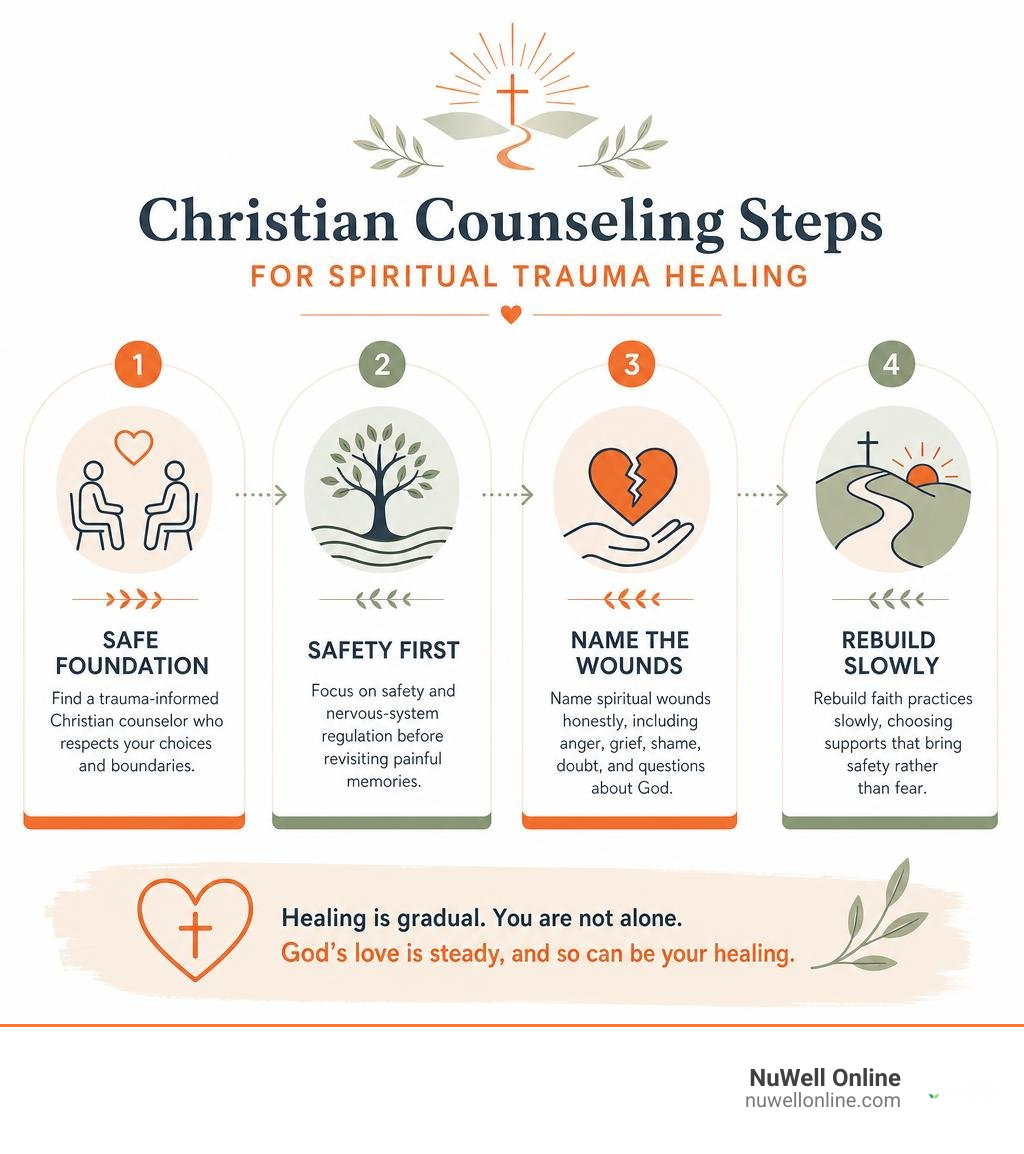
Christian counseling for spiritual trauma can help you heal from church hurt, religious abuse, spiritual manipulation, or painful beliefs about God without rushing, minimizing your story, or treating your symptoms as a lack of faith.
A healthy first step is to:
- Find a trauma-informed Christian counselor who respects your choices and boundaries.
- Focus on safety and nervous-system regulation before revisiting painful memories.
- Name spiritual wounds honestly, including anger, grief, shame, doubt, and questions about God’s goodness.
- Rebuild faith practices slowly, choosing supports that bring safety rather than fear.
Spiritual trauma affects the whole person. It can shape thoughts, relationships, physical stress responses, and the way someone sees God, themselves, and the church. This is why effective care brings together sound trauma therapy, compassionate pastoral support, and Scripture-rooted hope.
Healing is often gradual. Lingering pain does not mean God has abandoned you or that you have failed spiritually. You were created for more than survival, and recovery can make room for greater wholeness over time.
Important christian counseling spiritual trauma terms:
Understanding Spiritual Trauma: Mind, Body, and Faith Impact
Spiritual trauma occurs when spiritual authority, religious doctrine, or faith communities are used to manipulate, control, silence, or harm an individual. When sacred language and sacred trust are weaponized, the damage pierces deep into the soul, but it also alters the biological and emotional architecture of the person.
The nervous system cannot easily distinguish between a physical threat in the wild and a relational threat disguised in spiritual language. Adverse childhood experiences (ACEs)—including household instability, emotional neglect, healing from narcissistic parenting, or severe religious authoritarianism—are closely linked to long-term chronic disease, emotional dysregulation, and altered physiological responses. When trauma is experienced in an environment that claims to speak directly for God, the brain’s alarm system (the amygdala) gets stuck in an ongoing state of high alert.
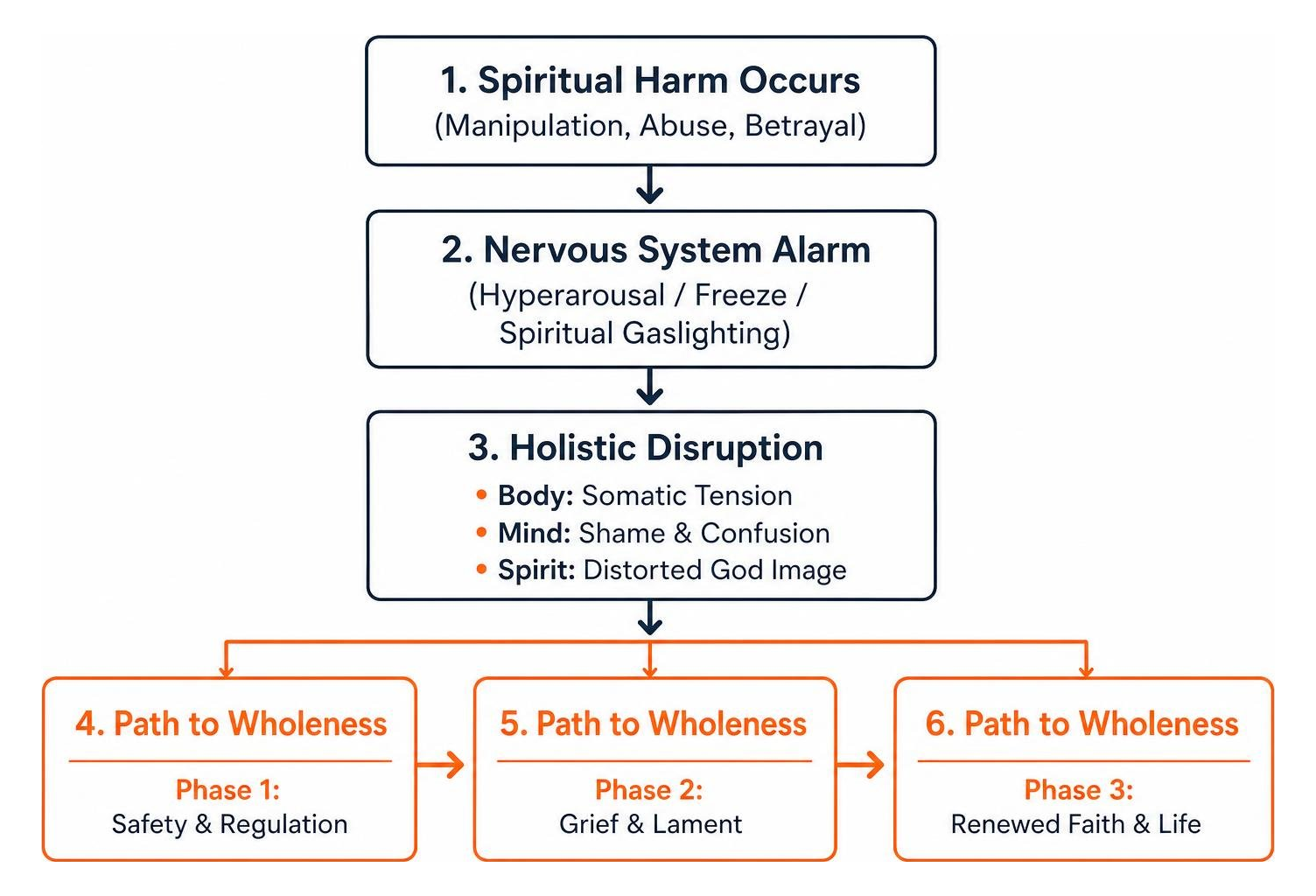
Trauma specialists describe how trauma shrinks a person’s “window of tolerance”—the optimal zone where they can manage emotions, think clearly, and feel safe. Outside this window, a survivor swings between hyperarousal (anxiety, panic, hyper-vigilance, and racing heartbeats) and hypoarousal (numbness, dissociation, depression, and spiritual apathy).
For many, recognizing spiritual abuse is complicated by religious gaslighting. When a leader says, “If you question this decision, you are rebelling against God,” or “Your chronic illness is proof of unconfessed sin,” the victim internalizes profound moral injury. Moral injury occurs when a person’s deepest sense of right and wrong is shattered by leaders or systems they trusted.
At NuWell Online, our pastoral counselors and certified Christian life coaches have found that clients rarely struggle merely with “theological confusion.” They carry somatic tension: clenched jaws, chronic gastrointestinal distress, migraines, and shallow breathing. Healing and wholeness require addressing both the physiological nervous system and the wounded spirit.
How Spiritual Trauma Distorts God Images and Beliefs
A person’s relational attachment style with early caregivers often mirrors their attachment style with God. When religious leaders practice manipulation or teach toxic theology that portrays God solely as an angry, demanding taskmaster, believers develop an anxious or avoidant spiritual attachment.
Instead of resting in the tender Father revealed in Scripture, survivors frequently experience God as:
- A hyper-critical judge waiting for them to make a single mistake.
- An emotionally distant monarch whose love must be earned through ceaseless service.
- An unsafe entity who demands silent obedience even in the face of ongoing abuse.
Gaining clarity on everything you need to know about spiritual abuse allows survivors to separate God’s character from the sinful behavior of human leaders. When spiritual abusers use Scripture as a tool of coercion, the brain connects Bible reading, prayer, and church buildings with danger. Deconstructing these distortions is not an act of backsliding; it is a vital step toward genuine biblical restoration.
The Neurobiology of Wounded Faith: Reparenting the Brain
For decades, well-meaning Christians have treated deep trauma strictly as a spiritual deficit, instructing survivors to “just pray harder” or “claim total victory.” While prayer is powerful, the brain itself undergoes structural and functional changes under chronic stress. Trauma disrupts the prefrontal cortex (executive functioning and logic) and over-activates the limbic system.
In his groundbreaking research on Trauma, the Holy Spirit, and Spiritual Formation: Facilitating Recovery in the Mind, Spirit, and Body – David C. Wang, 2024, Dr. Wang highlights that trauma recovery is an iterative process of reshaping and “reparenting” the brain over time. Neuroplasticity—the brain’s God-given ability to create new neural pathways—requires consistent experiences of emotional safety, patient co-regulation, and relational accompaniment.
Healing is not instantaneous emotional amnesia. Just as an infant learns safety through calm, attentive caregivers, the traumatized brain learns safety through safe human relationships and gentle, non-coercive spiritual encounters.
The Core Framework of Christian Counseling Spiritual Trauma Recovery
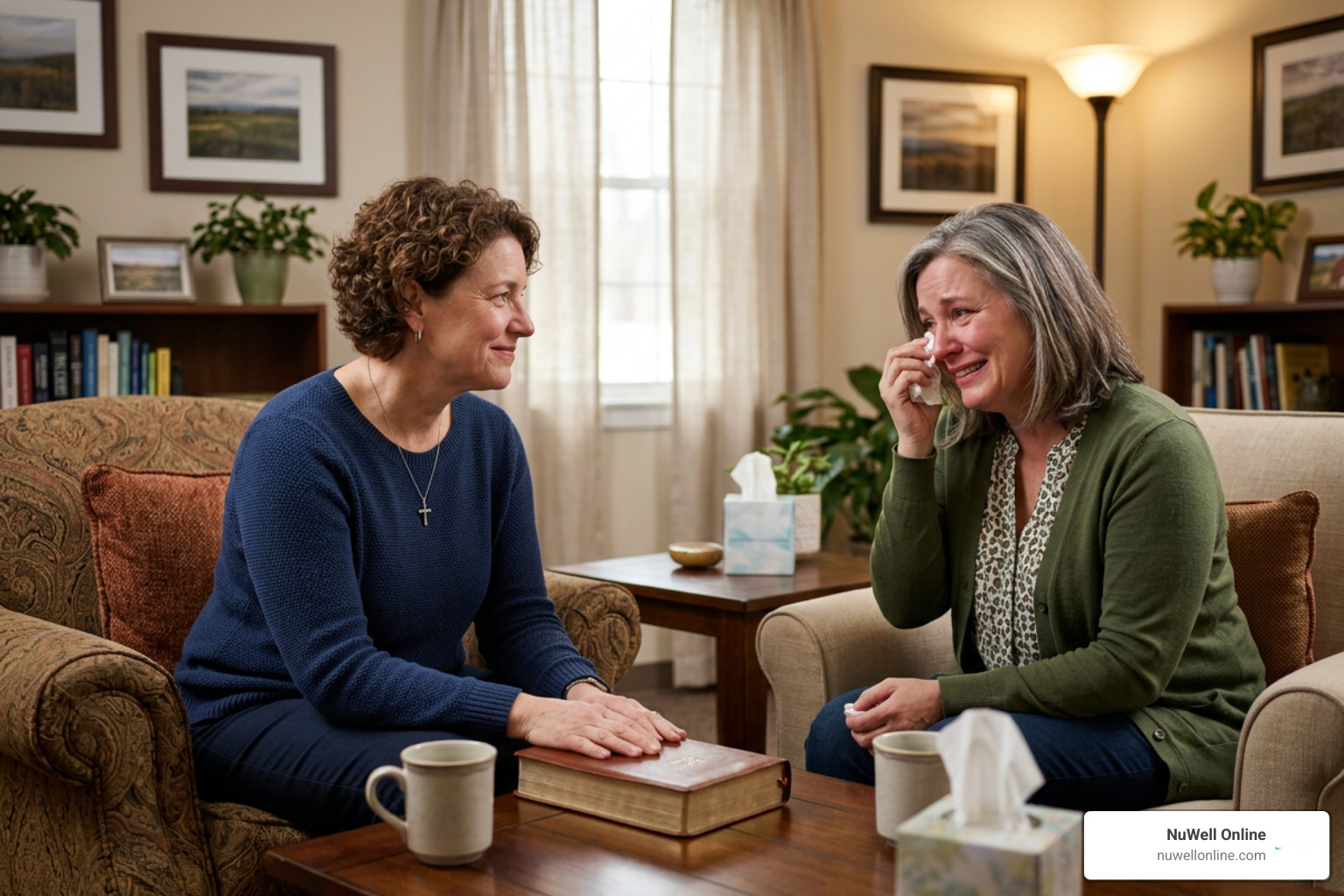
Navigating complex spiritual trauma demands an evidence-based clinical structure combined with theological depth. At NuWell, we integrate practical, proven tools with biblical truths, establishing an environment where you are heard, believed, and treated with dignity.
A premier gold standard for complex trauma recovery is Judith Herman’s classic three-phase model, tailored specifically for faith-based restoration, as outlined in clinical literature such as Heather Davediuk Gingrich’s clinical guide on restoring the shattered self. This framework ensures that no survivor is pushed into painful memories before developing real internal and external safety.
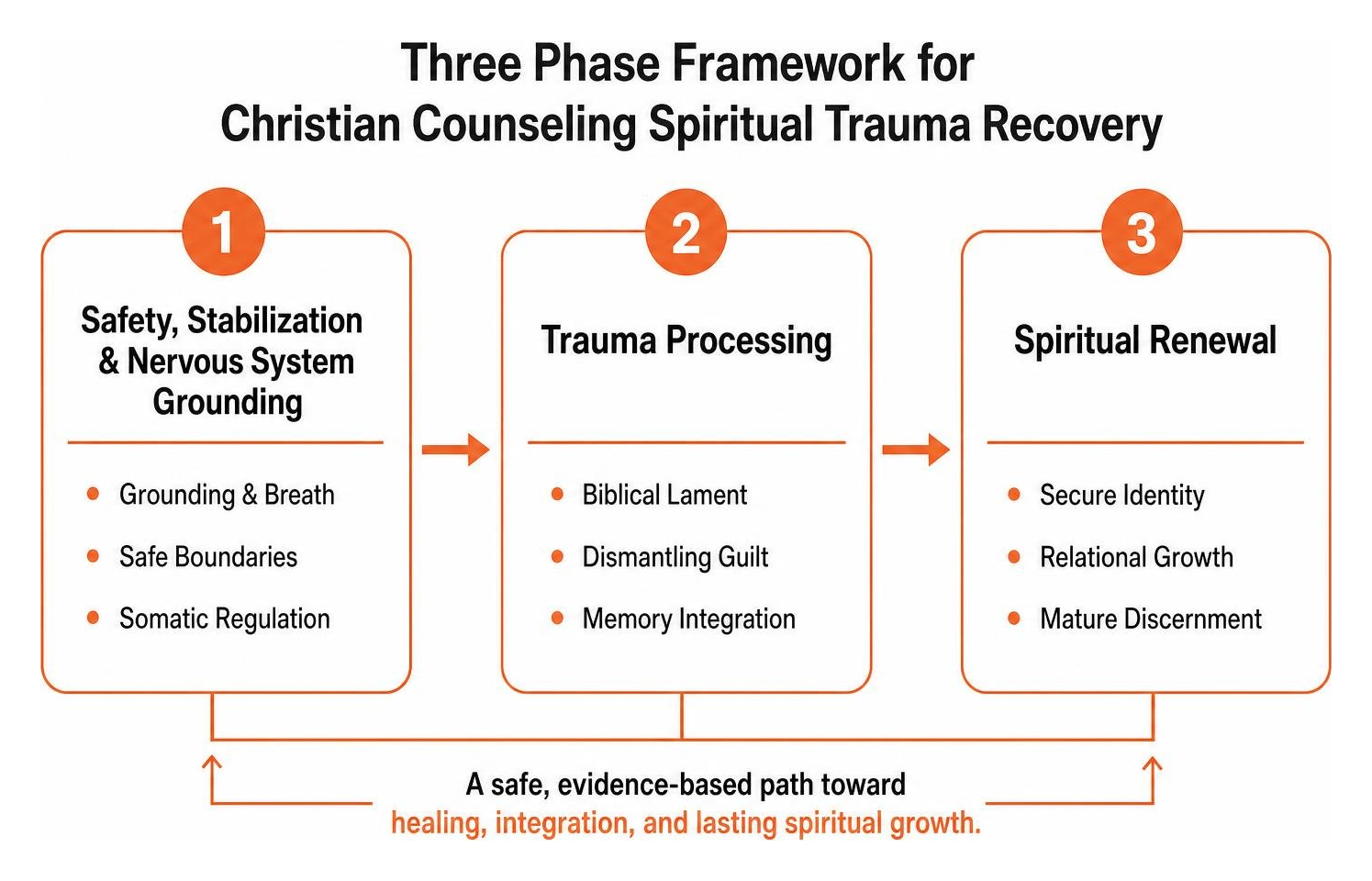
Our practice of Christian therapy for abuse navigating trauma with faith-based support honors your individual pacing, balancing practical support with the gentle work of the Holy Spirit.
Phase 1: Safety, Stabilization, and Nervous System Grounding
The first priority in Christian counseling spiritual trauma recovery is establishing an emotional and physical sanctuary. In this phase, we do not dive deep into past church wounds or force trauma narratives. Instead, we build emotional regulation and bodily safety.
Key interventions include:
- Somatic Grounding: Learning diaphragmatic breathing, sensory anchoring (such as the 5-4-3-2-1 technique), and body scans to pull the nervous system back inside its window of tolerance when triggered.
- Establishing Relational Boundaries: Learning to say “no” without guilt, identifying toxic relationship dynamics, and creating space from spiritually unsafe environments.
- Differentiating Voice: Disentangling the voice of an abusive authority figure from the still, small voice of God.
Through online Christian counseling for trauma, clients can engage in this stabilization work from the safety and privacy of their own homes, setting a foundation for long-term nervous system resilience.
Phase 2: Processing Spiritual Trauma and Grief
Once stabilization is established, Phase 2 focuses on memory integration and grief work. Trauma keeps memories fragmented, causing the past to intrude into the present as vivid flashbacks, panic attacks, or sudden emotional spirals.
In this phase, we guide clients through:
- Unmasking Church Betrayal: Naming the specific offenses, spiritual double-standards, and abuses of power without minimizing the injury.
- Biblical Lament: Engaging the rich scriptural tradition of lament (found across the Psalms and Lamentations), where righteous anger, grief, and confusion are poured out directly to God without fear of retribution.
- Dismantling Toxic Guilt: Learning the distinction between true conviction (which brings gentle restoration) and false religious shame (which brings condemnation and paralysis).
A profound theological reality is that Christ’s post-resurrection body retained the physical scars of His crucifixion (John 20:27). God did not erase Jesus’ scars; He redeemed them as marks of enduring victory. Processing trauma does not require you to pretend that the injury never happened. Discovering how to heal from church hurt without losing your faith entirely empowers you to integrate your story with honesty.
Phase 3: Spiritual Reconnection and Identity Consolidation
In the final phase, survivors transition from surviving to thriving. Here, the focus shifts toward rebuilding a healthy spiritual life, strengthening community connections, and living out the truth that you were created for more.
Clients develop healthy relational discernment, rebuild safe spiritual disciplines at their own pace, and walk in their authentic identity as beloved children of God.
| Harmful Spiritual Dynamics | Healthy Christian Trauma Recovery |
|---|---|
| Demands Immediate Forgiveness: Forgiveness is weaponized to bypass accountability and silence victims. | Paces Forgiveness Realistically: Forgiveness is an iterative process distinct from reconciliation and safety. |
| Suppresses Questions & Doubts: Doubting leaders or theology is labeled as rebellion or weak faith. | Invites Biblical Lament: Honest questions and sorrow are welcomed as authentic forms of faith. |
| Authoritarian Hierarchy: Absolute obedience to leaders is demanded as obedience to God. | Christ-Centered Liberty: True leaders serve humbly, encouraging personal autonomy and discernment. |
| Spiritual Bypassing: “Just pray it away” dismisses somatic trauma and nervous system distress. | Holistic Mind-Body Integration: Embraces neurobiology, bodily regulation, and emotional healing. |
| Isolation & Control: Enforces strict community insularity and shames those who establish boundaries. | Empowered Agency & Boundaries: Encourages healthy boundaries, personal growth, and supportive community. |
Through navigating trauma through faith, survivors cultivate a mature, resilient, and differentiated walk with the Lord.
Clinical Strategies for Complex PTSD and Dissociation in Faith-Based Care
Survivors of chronic, severe spiritual abuse or long-term religious authoritarianism frequently suffer from Complex Post-Traumatic Stress Disorder (C-PTSD) and dissociative adaptations. Dissociation is not a sign of demonic possession or spiritual failure; it is the brain’s emergency braking system when overwhelming terror or inescapable pain occurs.
Clinical screening tools such as the Dissociative Experiences Scale (DES-II) help Christian clinicians assess the severity of dissociative symptoms, ranging from simple daydreaming and emotional detachment to severe structural dissociation, such as Dissociative Identity Disorder (DID).
In faith-based care, we use compassionate, non-pathologizing “parts work” (informed by internal systems frameworks and sound pastoral theology). We help clients recognize that different internal parts of their personality—such as a fiercely defensive part, a frozen child part, or a hyper-religious self-critical part—developed as protective survival adaptations during unbearable trauma. We bring these parts into dialogue with the compassionate presence of Christ to foster internal harmony, safety, and integration.
Addressing Moral Injury and Questions of God’s Goodness
When leaders who represent God inflict trauma, survivors face existential crises: “Where was God when this happened?”, “Why did He allow them to use His Word to hurt me?”, and “Is God actually good?”
At NuWell, our counselors never brush these questions aside with trite platitudes. In our guide on scripture and scars how biblical counseling navigates deep trauma, we show how God makes space for the deepest cries of the human heart. Biblical figures like Job, David, and Jeremiah expressed profound bewilderment, grief, and raw anger directly to God. Pastoral accompaniment walks beside you in the dark, validating your pain while gently helping you dismantle the shame placed on you by abusive leaders.
Navigating the Already-But-Not-Yet in Christian Counseling Spiritual Trauma Care
A core tension in Christian theology is the eschatological reality of the “already-but-not-yet” Kingdom of God. The Kingdom of God has broken into our world through Jesus Christ, bringing real transformation, healing, and salvation (the already). Yet, we still live in a fallen world awaiting final restoration, where physical illness, relational sorrow, and emotional scars remain (the not-yet).
When applied to spiritual trauma, this theological insight lifts an immense burden. Believers often assume that if they still feel anxious when entering a church or feel a wave of sadness on certain anniversaries, their faith is deficient.
Recognizing the “already-but-not-yet” normalizes the reality that healing is an ongoing, gradual sanctification. As we explore in our guide to Christian shame vs conviction, grace meets you directly in your lingering pain. God works through gradual brain renewal and supportive community, extending loving patience to every step of your journey.
Equipping Faith Communities and Preventing Vicarious Trauma
A broken church wounded the survivor, but healthy Christian community and relational accompaniment are among the Holy Spirit’s greatest instruments for restoration. However, well-meaning churches often retraumatize survivors by using spiritual bypass, enforcing premature forgiveness, or prioritizing institutional reputation over victim care.
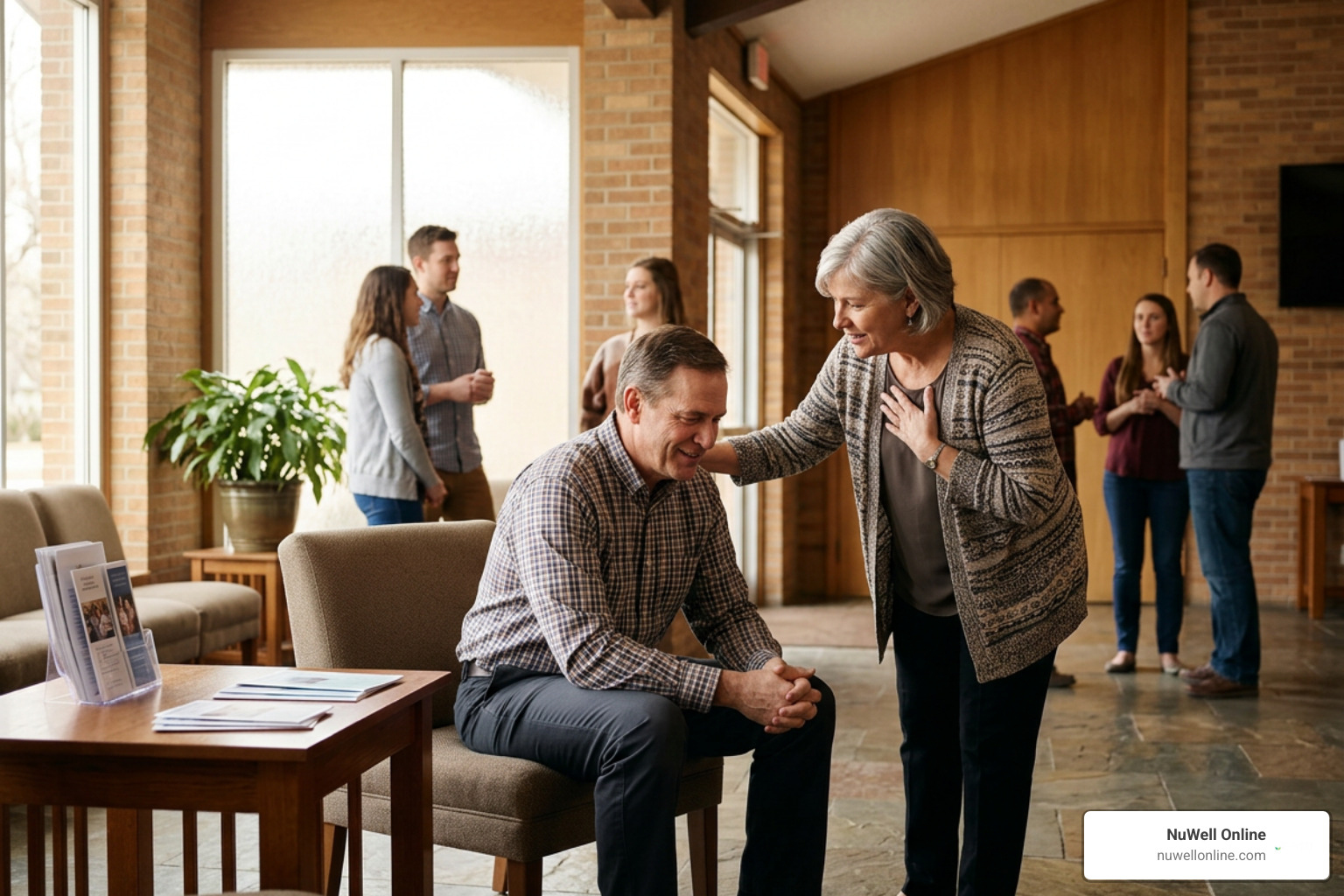
Churches need specialized church hurt counseling resources and trauma-informed education to transform their ministries into secure spiritual refuges.
Building Trauma-Informed Churches That Nurture Healing
A trauma-informed church operates with a posture of humility, active listening, and relational safety. To support survivors effectively, ministries should:
- Dismantle Authoritarian Structures: Foster cultures where pastoral leadership is accountable, transparent, and approachable.
- Eliminate Spiritual Bypassing: Stop telling grieving and traumatized members to “just have more faith” or to instantly reconcile with unrepentant abusers.
- Train Ministry Staff on Abuse Dynamics: Educate pastoral staff on the warning signs of spiritual abuse, coercive control, and domestic violence.
- Practice Communal Accompaniment: Create small groups focused on steady support, where people can be honest about their struggles without fear of being judged or excluded.
Sustaining Clinicians: Best Practices in Christian Counseling Spiritual Trauma Work
Walking alongside survivors of deep spiritual wounds and complex trauma exposes counselors and pastoral care ministers to vicarious traumatization (secondary traumatic stress). Listening to stories of severe abuse, betrayal, and suffering can gradually wear down a clinician’s emotional reserves, disrupt their sleep, and cloud their own spiritual life.
To sustain long-term ministry, Christian clinicians must practice intentional resilience strategies:
- Consistent Clinical Supervision and Peer Consultation: Processing difficult cases in safe clinical spaces to prevent isolation.
- Rigorous Boundary Setting: Maintaining distinct separation between counseling sessions, church life, and personal time.
- Sabbath Rest and Spiritual Replenishment: Practicing contemplative prayer, silence, and Sabbath rest to receive God’s care rather than constantly ministering to others.
- Personal Therapy: Engaging in counseling to process personal triggers and secondary trauma exposure.
Frequently Asked Questions About Christian Counseling and Spiritual Trauma
Can you heal from religious abuse without walking away from Christian faith?
Yes. Healing from religious abuse does not mean abandoning Christ; it means dismantling the harmful human traditions, control tactics, and false doctrines that distorted your understanding of Him. Many survivors undergo a healthy process of faith deconstruction—stripping away toxic religiosity—followed by a rich reconstruction grounded in God’s grace and love. By applying 5 practical ways to solve your spiritual abuse problems for good, you can set healthy boundaries, find safe community, and experience an authentic relationship with God.
Why does trauma recovery take time if God has the power to heal instantly?
While God possesses the power to perform instantaneous miracles, His ordinary and normative method of restoration is gradual, relational, and transformative. Scripture describes spiritual growth and renewal as an ongoing journey—the renewing of the mind (Romans 12:2). Trauma physically reshapes neural pathways in the brain, and God has designed our biology to heal through iterative, safe experiences over time. Christ retaining His wounds post-resurrection reminds us that lingering scars are not signs of spiritual failure, but testaments to enduring grace.
How do I find the right faith-informed trauma specialist?
Finding the right counselor requires looking for a professional who integrates sound clinical trauma modalities (such as EMDR, somatic tracking, and phased trauma treatment) with biblically sound pastoral care. Ensure the clinician understands the nuances of religious trauma and will never use Scripture to shame or coerce you. For guidance on selecting a professional who respects your autonomy and pacing, read our guide on how to find therapy for spiritual abuse and reclaim your life.
Conclusion
Spiritual trauma can shake the foundation of your world, leaving you feeling disconnected from your body, your community, and your God. Yet your story does not end in brokenness. You were created for healing, wholeness, and authentic spiritual freedom.
At NuWell Online, based in North Huntingdon, PA, our mission is to walk beside you with professional care and deep, Christ-centered compassion. Whether you are dealing with church hurt, complex trauma, or religious manipulation, our team is here to support you every step of the way.
Take the next step in your healing journey today by scheduling a confidential online session for compassionate pastoral counseling for spiritual trauma with our team at NuWell Online. Discover what is possible when faith, evidence-based care, and genuine grace come together.
This article was researched with the help of AI and reviewed and edited by Jordan Oliver for accuracy, Scripture references, and faithfulness to NuWell’s non-clinical scope.
Jordan is an author, ordained minister, and online host for His Glory TV, sharing biblically grounded insights on faith, prayer, and spiritual growth. She is the co-founder of Triple-Braided Cord Co., an intercessory prayer and healing ministry inspired by Ecclesiastes 4:12.
Jordan holds a Bachelor’s degree in Communications and Religious Studies from High Point University and is a certified Spiritual Life Coach through iCoachLife in Nashville, Tennessee. Drawing from her ministry, coaching, and academic experience, she creates trustworthy, faith-based content that helps readers grow in their relationship with God. Learn more about Jordan here.
