

When Faith Meets the Pain of a Broken Marriage
Christian counseling on divorce is a faith-rooted form of professional support that helps believers navigate one of life’s most painful experiences — the breakdown of a marriage covenant — through the lens of Scripture, grace, and practical healing.
If you are looking for a quick orientation, here is what you need to know:
What Christian counseling on divorce typically addresses:
- Biblical grounds for divorce — including adultery (Matthew 19:9), abandonment (1 Corinthians 7:15), and in many pastoral frameworks, severe unrepentant abuse or coercive control
- Marriage crisis prevention — identifying root causes of conflict before a marriage reaches the breaking point
- Safety discernment — knowing when separation is not just permitted but necessary
- Divorce recovery — healing spiritually, emotionally, and practically after a marriage ends
- Children and co-parenting — shepherding kids through family transition with faith and care
- Reconciliation vs. acceptance — discerning whether to pursue restoration or grieve the end of the marriage
No one who says “I do” imagines sitting in a counselor’s office wondering if the marriage is over. Yet many believers find themselves there — exhausted, confused, and carrying a unique weight that secular therapy rarely addresses fully.
That weight is real. Marriage in the Christian faith is not just a legal contract. It is a covenant that reflects Christ’s relationship with the Church (Ephesians 5:32). When it fractures, the pain cuts to the core of a person’s identity, faith, and sense of God’s purpose for their life.
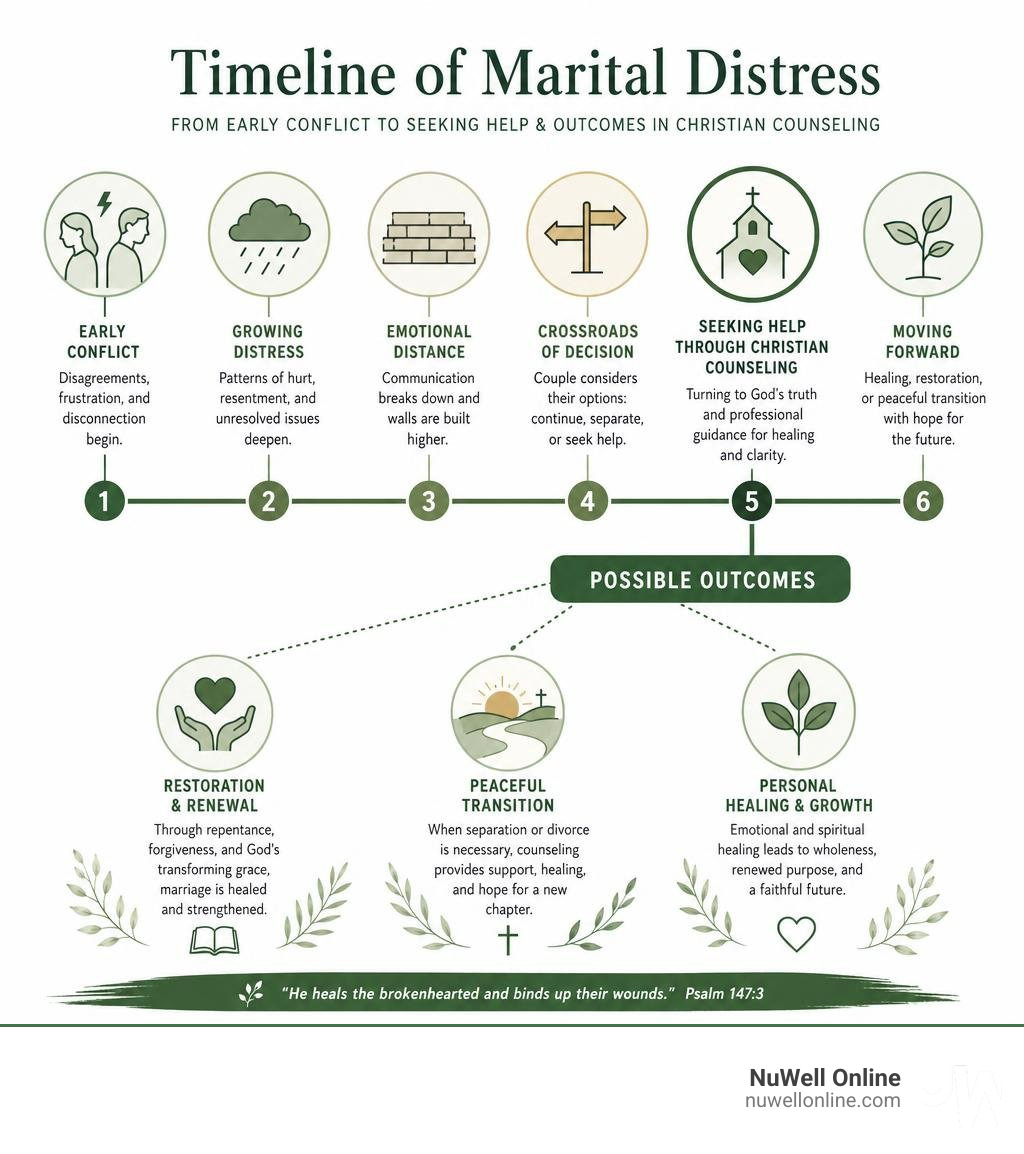
Research confirms what many couples feel but rarely admit: on average, couples live with significant relationship distress for about six years before seeking professional help. Six years of quiet suffering before asking for support.
At NuWell Online, we have found that addressing marital distress early — with a blend of Biblical truth and evidence-based practices — makes a profound difference in outcomes, whether the goal is restoration or healing through a painful ending.
This guide walks you through what Scripture actually says, when separation is wise or necessary, how counseling can help, and how to find healing and wholeness on the other side — because you were created for more than surviving a broken marriage alone.
What the Bible Says About Divorce, Separation, and Covenant-Breaking Harm
To understand how christian counseling on divorce approaches a marital crisis, we must ground our perspective in what Scripture actually teaches. God’s design for marriage is lifelong, loving permanence. However, Scripture is deeply realistic about the presence of human sin and brokenness.
When counseling couples, we look closely at the two primary passages that address the dissolution of a marriage:
- Matthew 19:9 (The Exception of Sexual Immorality): Jesus states that divorce is permissible in cases of sexual unfaithfulness (porneia). Adultery actively tears the covenant apart, violating the one-flesh union.
- 1 Corinthians 7:15 (The Exception of Abandonment): The Apostle Paul explains that if an unbelieving spouse chooses to depart, the Christian partner is “not under bondage in such cases.” God has called us to peace.
Many evangelical theologians and pastoral counselors recognize that “abandonment” is not always a physical departure from the home. A spouse who engages in severe, unrepentant, covenant-breaking harm – such as physical abuse, extreme neglect, or severe addiction where they refuse help – is actively abandoning their marital vows.
God does not expect a spouse to tolerate or cover up unrepentant, covenant-breaking sin. In our practice, we help spouses process these realities by exploring What Does the Bible Say About Family Conflict to find clarity and theological peace during an incredibly isolating time.
Discerning Safety and Unrepentant Sin in Christian Counseling on Divorce
There is a vital distinction between ordinary marital friction and a marriage characterized by destructive, unrepentant sin. In christian counseling on divorce, we must never twist Scripture’s call to honor marriage into a demand that a person remain in immediate physical or psychological danger.
We categorize severe, toxic behaviors as clear indicators of a broken covenant:
- Physical Violence: Immediate safety is the absolute priority. Scripture does not command a spouse to endure physical battery.
- Coercive Control and Emotional Abuse: Constant gaslighting, extreme isolation, and financial withholding can destroy a person’s psychological well-being.
- Weaponized Silence: Refusing to speak to a spouse for weeks or months while living under the same roof is a form of angry, punitive control.
The statistics surrounding domestic harm are sobering. Intimate partner violence is incredibly dangerous; research indicates that one-third of female murder victims are killed by intimate partners. Furthermore, bystanders or individuals who attempt to intervene in an intimate partner homicide account for another 20% of murder victims. For additional education on warning signs, safety planning, and support options, the National Domestic Violence Hotline provides confidential resources.
If you are dealing with a spouse who uses physical intimidation, such as blocking doorways or destroying property, safety planning is a mandatory step. We work alongside local crisis resources, legal advocates, and regional safety networks to ensure our clients have safe havens and protections in place before we even begin discussing the future of the marriage.
How Biblical Counseling Can Prevent Divorce by Addressing Root Conflict
While we must protect the vulnerable, our primary goal when a couple comes to us in distress is to explore every avenue of healing. Many marriages can be saved if we address the root, heart-level issues driving the conflict.
As partners in care, we look at the underlying desires, fears, and demands that fuel arguments. In James 4:1, the Bible asks, “What causes fights and quarrels among you? Don’t they come from your desires that battle within you?” We often demand that our spouse satisfy a deep emotional or spiritual need that only Jesus Christ can fulfill. When they fail, we react in anger, withdrawal, or bitterness.
By using The Ultimate Guide to Christian Counseling for Marriages, couples learn to slow down and stop using divorce as a weapon in everyday arguments. Removing the threat of divorce from daily conflict replaces fear with the safety needed for honest communication.
We also integrate evidence-based relationship science. For example, stable marriages consistently maintain roughly a 5-to-1 ratio of positive interactions to negative interactions during conflict. Through structured Marriage Conflict Resolution, we help couples rebuild this positive buffer, learning to speak the truth in love without destroying their connection.
Restoring Marriages Through Faith-Based Couples Therapy
In many struggling relationships, couples find themselves trapped in a destructive “pursue-withdraw” cycle. One spouse pushes harder to talk, while the other shuts down and withdraws to protect themselves. This cycle itself becomes the enemy, leaving both partners feeling rejected and isolated.
At NuWell Online, we utilize Faith-Based Couples Counseling That Actually Saves Marriages to help couples identify this pattern. We teach spouses to:
- Recognize when they are entering the cycle and actively slow down.
- Use a “softer start” to difficult conversations, naming their own hurts rather than attacking their partner’s character.
- Establish genuine emotional safety, allowing both partners to lower their defenses without fear of retaliation.
The Role of Premarital Preparation in Preventing Marital Breakdown
The best way to manage a marital crisis is to prevent it from starting. Couples often live with relationship distress for an average of six years before seeking help—meaning by the time they reach a counselor, years of resentment have built up.
Premarital counseling acts as a vital shield. Research shows that couples who participate in structured premarital programs improve their relationship quality by approximately 30%, particularly in their communication and conflict-management skills. By investing in these skills early, couples build a firm foundation on the rock of Christ, minimizing the likelihood of future marital breakdown.
Navigating Crisis: When Marital Separation is Biblically Advisable
There are times when a marriage hits a wall, and continuing to live together is no longer viable or safe. In these scenarios, physical separation is not a step toward divorce, but a necessary boundary to protect the vulnerable and shock the sinning spouse into reality.
A biblical separation involves physically removing oneself from the home to distance oneself from a spouse’s presence, control, or abuse. This is highly advisable when:
- Physical safety is compromised: If there is violence or credible threats of harm.
- Unrepentant covenant-breaking sin persists: When a spouse refuses to stop engaging in adultery, severe addiction, or destructive emotional abuse.
In these cases, we do not advise a passive wait-and-see approach. We guide the sinned-against spouse to initiate the Matthew 18 church discipline process. If a professing Christian spouse refuses to repent of destructive behaviors, the local church leadership must intervene. If they remain unrepentant, they are treated as an unbeliever, which brings the protective boundaries of 1 Corinthians 7 into play.
We must be realistic: separation is a high-risk landscape. In professional counseling circles, it is widely observed that out of eight couples counseled through physical separation, no more than two actually reunify; the rest ultimately lead to divorce. Because of this, separation must be approached with structured safety planning, clear boundaries, and pastoral oversight.

The Role of Church Leadership and Pastoral Care in Crisis
Through Pastoral Counseling, church leaders can walk with both partners, offering protection to the vulnerable while calling the offending spouse to deep repentance.
To help couples and church leaders understand what they are dealing with, we use this simple framework to distinguish between normal marital struggles and covenant-breaking harm:
| Ordinary Marital Struggles | Covenant-Breaking Harm & Abuse |
|---|---|
| Selfishness, poor communication, and minor disagreements | Physical violence, threats, or stalking |
| Differing opinions on finances or parenting styles | Coercive control, isolation, and financial abuse |
| Occasional emotional distance or insensitivity | Chronic, weaponized silence and gaslighting |
| Willingness to confess sin and seek mutual growth | Defensiveness, blame-shifting, and unrepentant betrayal |
Discerning the Next Step: Reconciliation or Accepting the End
When a marriage is on the brink, couples often face agonizing ambivalence. One spouse may want to save the marriage (“leaning in”), while the other is ready to leave (“leaning out”). In these situations, jumping straight into traditional couples therapy can be counterproductive because their goals are completely misaligned.
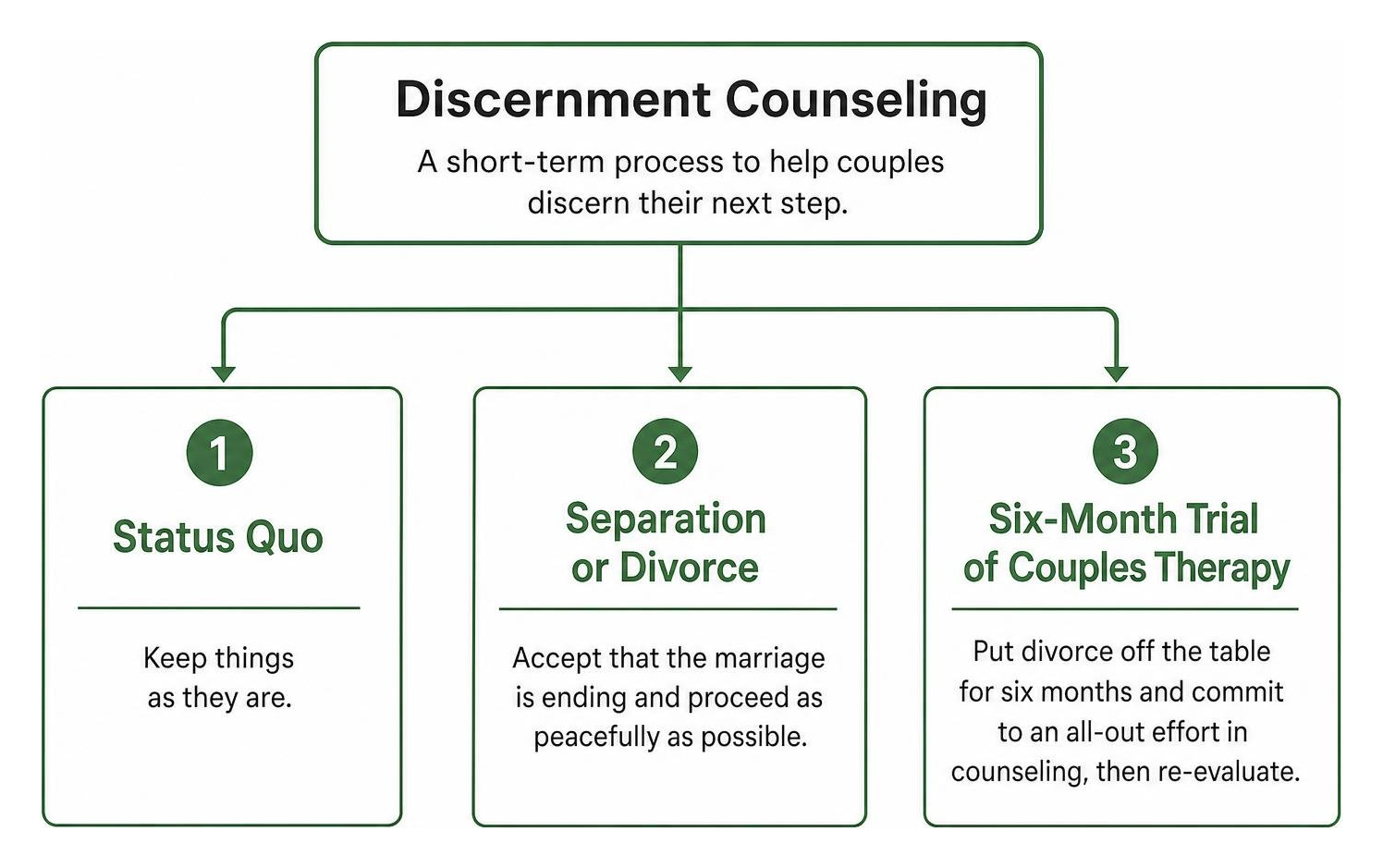
This is where discernment counseling is invaluable. Discernment counseling is a short-term, structured assessment tool designed to help couples decide on one of three paths:
- Status Quo: Keep things as they are.
- Separation or Divorce: Accept that the marriage is ending and proceed as peacefully as possible.
- A Six-Month Trial of Couples Therapy: Put divorce completely off the table for six months and commit to an all-out effort in marriage counseling, after which they will re-evaluate.
During this process, we help spouses explore Forgiveness as a Christian. We must emphasize that forgiveness is not the same as immediate reconciliation or trust. Forgiveness is a heart-level release of bitterness to God, whereas trust must be rebuilt over time through consistent, verifiable change.
Assessing Genuine Repentance and Rebuilding Trust
If a couple chooses the path of restoration, the offending spouse must demonstrate genuine repentance. In our work, we train spouses and church leaders to look for the “fruits of repentance” rather than relying on quick verbal apologies:
- Truth-Telling: The spouse tells the whole truth without minimization or blame-shifting.
- Godly Sorrow: They exhibit deep brokenness over the pain they have caused, rather than worldly embarrassment over being caught.
- Behavioral Change: They willingly submit to accountability, such as financial transparency, counseling, or recovery programs.
- Empathy: They show an active, sensitive awareness of the specific trauma and fear their spouse is experiencing.
Finding Healing and Wholeness Through Christian Counseling on Divorce
If restoration is not possible—either because a spouse refuses to repent, continues in betrayal, or has abandoned the home—the sinned-against spouse must navigate the painful transition of divorce.
Divorce is a traumatic experience that represents a profound death. The average marriage lasts about 8 years before divorce, and the process is costly, typically ranging from $7,000 to $15,000. Beyond the financial and legal toll, the spiritual and emotional grief can feel overwhelming. Many Christians experience intense “Christian guilt” and fear judgment from their church community, leading them to withdraw from the very support systems they need.
At NuWell Online, we have seen individuals find profound spiritual-emotional healing and realize they are truly created for more, even after the pain of a broken covenant. Healing does not mean pretending the pain does not exist. It involves taking your raw grief, anger, and questions to God in honest, biblical lament.
Through pastoral support (see how to cope with divorce as a Christian), we help you process the stages of grief, rebuild your identity in Christ, and discover that your story is not over. God’s grace is sufficient to rewrite your future with purpose and divine love.
Rebuilding Your Life with Christian Counseling on Divorce
Rebuilding your life after a divorce requires a holistic approach. We encourage our clients to focus on several key areas of growth:
- Support Networks: Engage with healthy, non-judgmental church ministries, small groups, or specialized programs like DivorceCare.
- Co-Parenting with Grace: Protect your children from adult conflicts. We help parents learn to navigate complex dynamics, including Co-Parenting with a Narcissist, ensuring children feel secure, loved, and free from loyalty conflicts.
- Professional Care: Utilize Online Christian Counseling to work through trauma, manage anxiety, and establish healthy personal boundaries.
If you are in Pennsylvania or seeking support nationwide, NuWell Online provides professional, faith-aligned virtual care that fits into your daily life. Additionally, local church ministries, community support groups, and Christian divorce recovery programs provide wonderful, hands-on communities of care to help you heal and rebuild.
Frequently Asked Questions About Faith-Based Divorce Recovery
Can biblical counseling help if only one spouse is willing to attend?
Yes. While joint participation is the ideal path for saving a marriage, counseling for one spouse is incredibly valuable. It provides a safe space to set healthy boundaries, find emotional stability, and gain clarity on how to respond to a difficult or unresponsive partner. One spouse changing their patterns can often shift the entire dynamic of the relationship.
Does the Bible permit divorce in cases of severe emotional or physical abuse?
Yes, many evangelical theologians and pastoral counselors agree that severe, unrepentant abuse, physical violence, and extreme coercive control constitute a fundamental breaking of the marriage covenant. This behavior is a form of abandonment of the marriage vows, and God’s word does not command a believer to remain in an unsafe, destructive environment.
How does Christian counseling differ from secular marriage counseling?
Secular therapy focuses primarily on behavioral modification and psychological techniques to maximize personal happiness. While we value practical insights, Christian counseling integrates these evidence-based tools with Scripture, prayer, and dependence on the Holy Spirit. We look at the heart, focus on spiritual-emotional healing, and seek to align your life with God’s design.
Conclusion
The road through marital distress, separation, or divorce is one of the most challenging paths a believer can walk. Yet, even in the midst of the deepest sorrow, you are not alone. God is a healer of broken hearts, and He specializes in bringing beauty out of ashes.
Whether you are seeking to repair a damaged marriage, navigating a painful separation, or trying to rebuild your life after a divorce, professional, faith-aligned support is available. At NuWell Online, we are committed to walking with you every step of the way, helping you find the grace, truth, and clarity you need.
If you are ready to take the next step toward healing and wholeness, we invite you to explore Holy Healing: Why You Need a Christian Life Coach for Divorce or reach out to us today to schedule an online counseling session. Your story isn’t over—let us help you discover the new chapter God has for you.
This article was researched with the help of AI and reviewed and edited by Jordan Oliver for accuracy, Scripture references, and faithfulness to NuWell’s non-clinical scope.
Jordan is an author, ordained minister, and online host for His Glory TV, sharing biblically grounded insights on faith, prayer, and spiritual growth. She is the co-founder of Triple-Braided Cord Co., an intercessory prayer and healing ministry inspired by Ecclesiastes 4:12.
Jordan holds a Bachelor’s degree in Communications and Religious Studies from High Point University and is a certified Spiritual Life Coach through iCoachLife in Nashville, Tennessee. Drawing from her ministry, coaching, and academic experience, she creates trustworthy, faith-based content that helps readers grow in their relationship with God. Learn more about Jordan here.
